PUTTING DOWN THE IPHONE AND PICKING UP AN SLR CAMERA
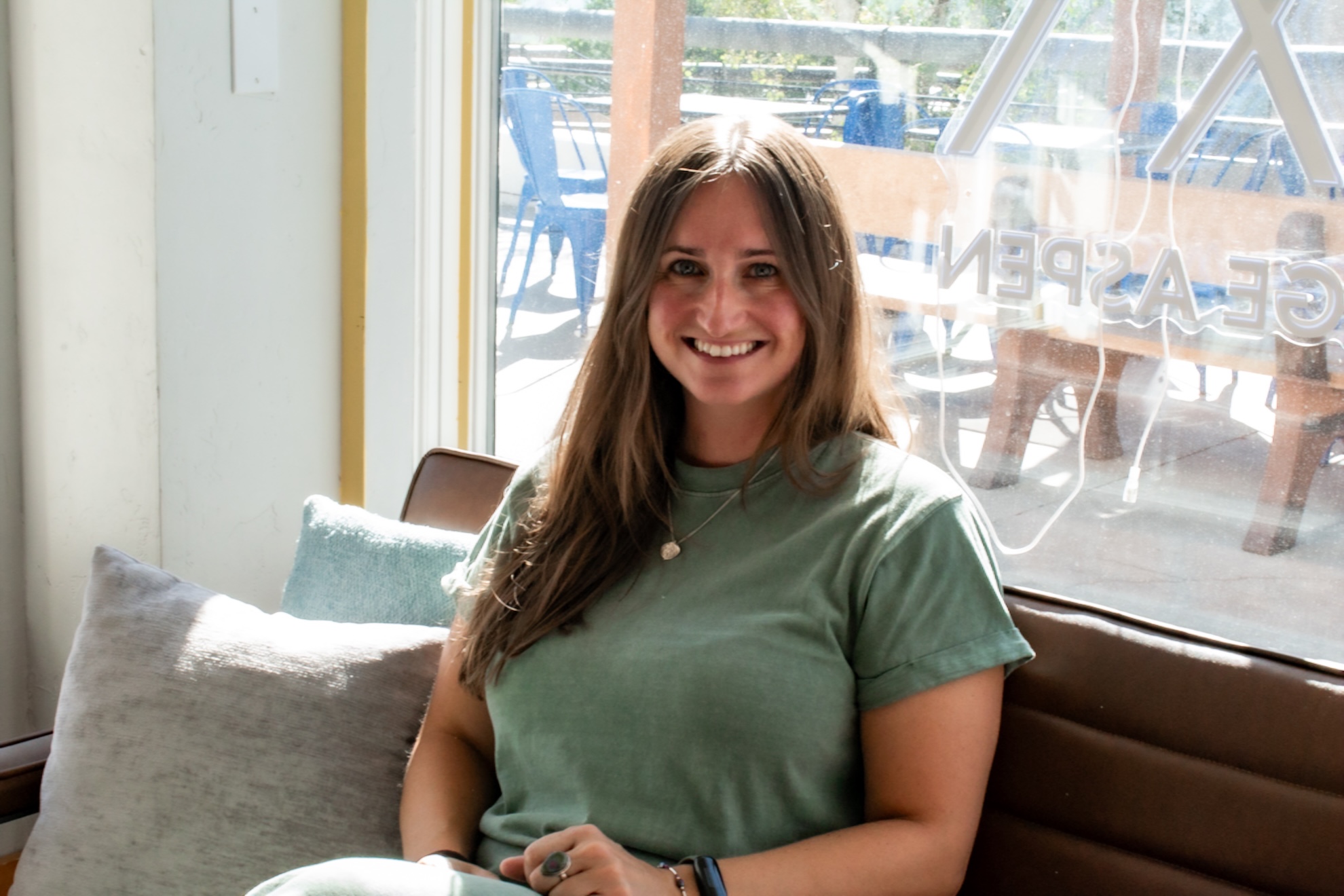
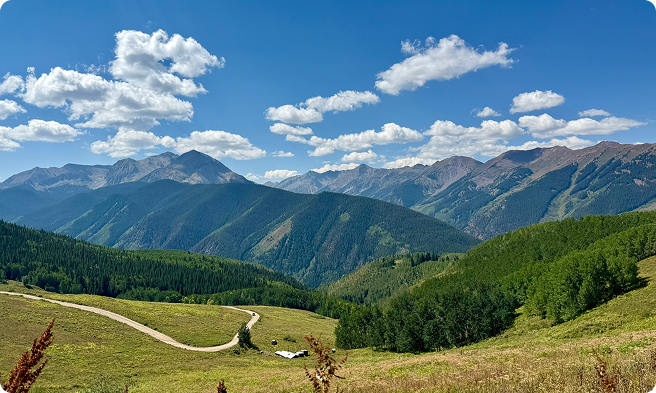
It's almost a crime that I've lived in the Roaring Fork Valley for more than 35 years and have only taken one history of art lecture at Anderson Ranch Arts Center, which was phenomenal and should have kept me going there, but life got in the way. If you read past posts, you'll see that I've been changing that excuse and jumping on ideas I have that linger. Taking a photography class was one of those ideas, and so I applied for a Documentary Photography Class: The Total Immersion Approach, taught by New York Times and National Geographic documentary photographer Isadora Kosofsky.
GETTING TO THE HEART AND SOUL OF DOCUMENTARY WITH ISADORA KOSOFSKY AT ANDERSON RANCH ARTS CENTER
First of all I should start by stating that after raising three boys while also working, my ability to sit and focus in a classroom from 9-5, was one of my biggest concerns. I write a ton, but I get up every 15 minutes to walk around and keep my blood moving. How was I going to manage this in a classroom? Turns out, our teacher was a true story teller, and she kept us captivated transporting us into her work with a focus on two of her projects: "Senior Love Triangle" and "Vinny".
With a belief that the strongest images come from genuine connection, rather than simply showing up with a camera, Isadora has a love for all of her subjects, and will relocate to where they are whenever the opportunity arises. spending months and years embedded in the lives of the people she shadows. For her, using our intuition and forming relationships with the subjects is tantamount to the image-making. Inevitably, if one is patient and using all of our senses, we will earn the trust of our subjects and produce an enriching experience, both for those seeing the pictures and also for the photographers and their subjects.
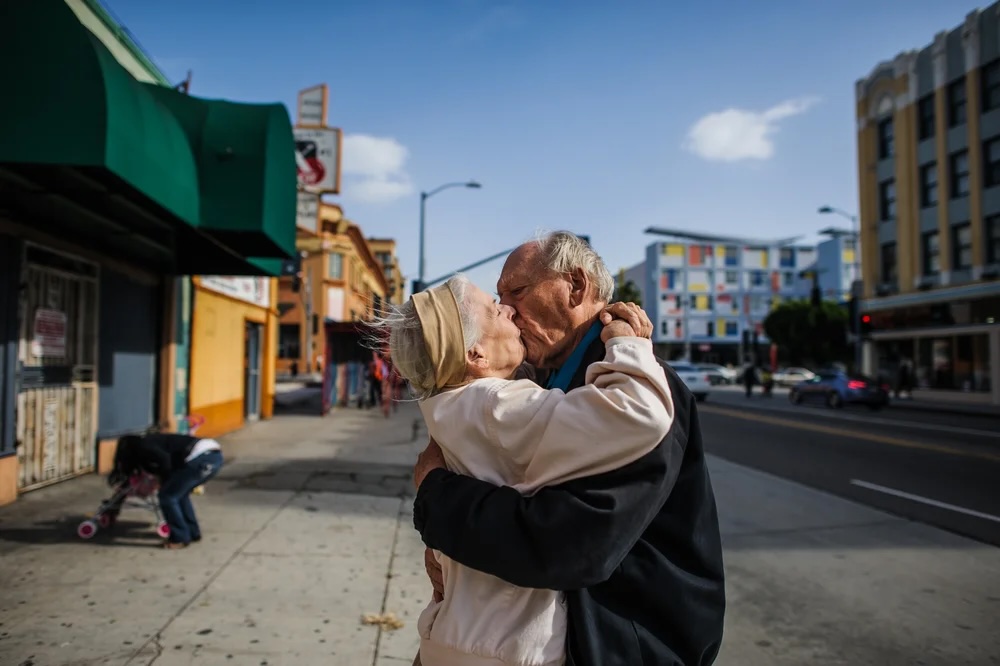
Jeanie, age 81; Will, 84; and Adina, 90, are bound by their relationship. “Senior Love Triangle” is a long-term photo documentary that shadows three aged individuals in a romantic conflict. They view their connection as a shield from the loneliness of aging. Even though Jeanie, Will and Adina’s relationship began at a senior care facility in Los Angeles, California, the outside world is more like home. For them, the care center is a reminder of solitude. Attempting to find solace within themselves, they seek escape with each other. In describing their bond, Will shares, “We live above the law. Not outside the law, but above the law. We are not outlaws.” In his late 70s, Will moved into a retirement home where he met Adina. Eventually they formed a relationship and Will moved into Adina’s apartment. After being kicked out of the retirement home for violating terms of his lease, Will moved into another facility where he met Jeanie. Not wanting to break off his relationship with Adina after falling in love with Jeanie, Will opted to continue maintaining his bond with both women.
Through their relationship, Jean, Will and Adina challenge socio-cultural norms projected about the elderly. Jeanie, reflecting on her life, confides, “I do not wish to assume all the garments of maturity.” Jeanie seeks empowerment, reiterating, “I want to be free.” For these individuals, aging is paradoxically a form of both loss and liberation. Attempting to find solace within themselves, they seek escape with each other.
“Vinny and David” begins with Vinny, then 13, when he was incarcerated for stabbing his mother’s assailant, and shadows him and his older brother, David, age 19; the long-term photo essay focuses on the brothers’ lives in their family, community and respective incarcerations over ten years in Albuquerque, New Mexico.... In early 2012, I saw Vinny in the booking section of the juvenile detention center in Albuquerque. I soon learned that Vinny was incarcerated for stabbing the man who was assaulting his mom. In the motel room where they lived, Vinny, age 13, was cutting food to make for his two younger siblings, Elysia and Michael, as Eve, their mom, argued with a family friend, Jessie, about borrowing $70 to bond her eldest son and Vinny’s brother out of jail. Jessie exploded in anger and began to beat Eve to the ground. “When my mom was being beat up,” Vinny says, “I didn’t know what to do. I am tired of seeing my mom get hurt.” In juvie, he was only able to visit with his mom. Sitting with him, he spoke continually about his brother, “my brother is a dope seller. He’s not good and not bad, I love my brother more than anything in the world.” .... Vinny and David have grown up in an environment of loss and violence yet yearn for love and connection. In the midst of turmoil, Vinny and David try to embrace their youth. Vinny describes David as a father figure, and David views Vinny as the only person who appreciates him. ~ Isadora Kosofsky (click here to see the pictures and read the story)
Isadora was only fourteen when she began this journey into photography, documenting individuals in hospice care. At sixteen, she embedded herself inside a youth prison system where she met Vinny. She also met a young girl around the same age and thus began her career in documentary photography.
When I first met Isadora, it was at the introductory dinner with the rest of my classmates. With great admiration of her work I was a bit nervous to meet her, but she radiated the kind of warmth, sincerity and depth of compassion that transcended into the classroom and pulled the 8 students and two interns all closer together as we critiqued and paired down each other's work to 15 photos, out of approximately 2000 images, each! As one would suspect when a group of photographers spend a week together in an immersive classroom, we all came from different places, and our backgrounds were diverse but our curiosity and appreciation for each other's work, as well as the subject matter, brought us all close together.
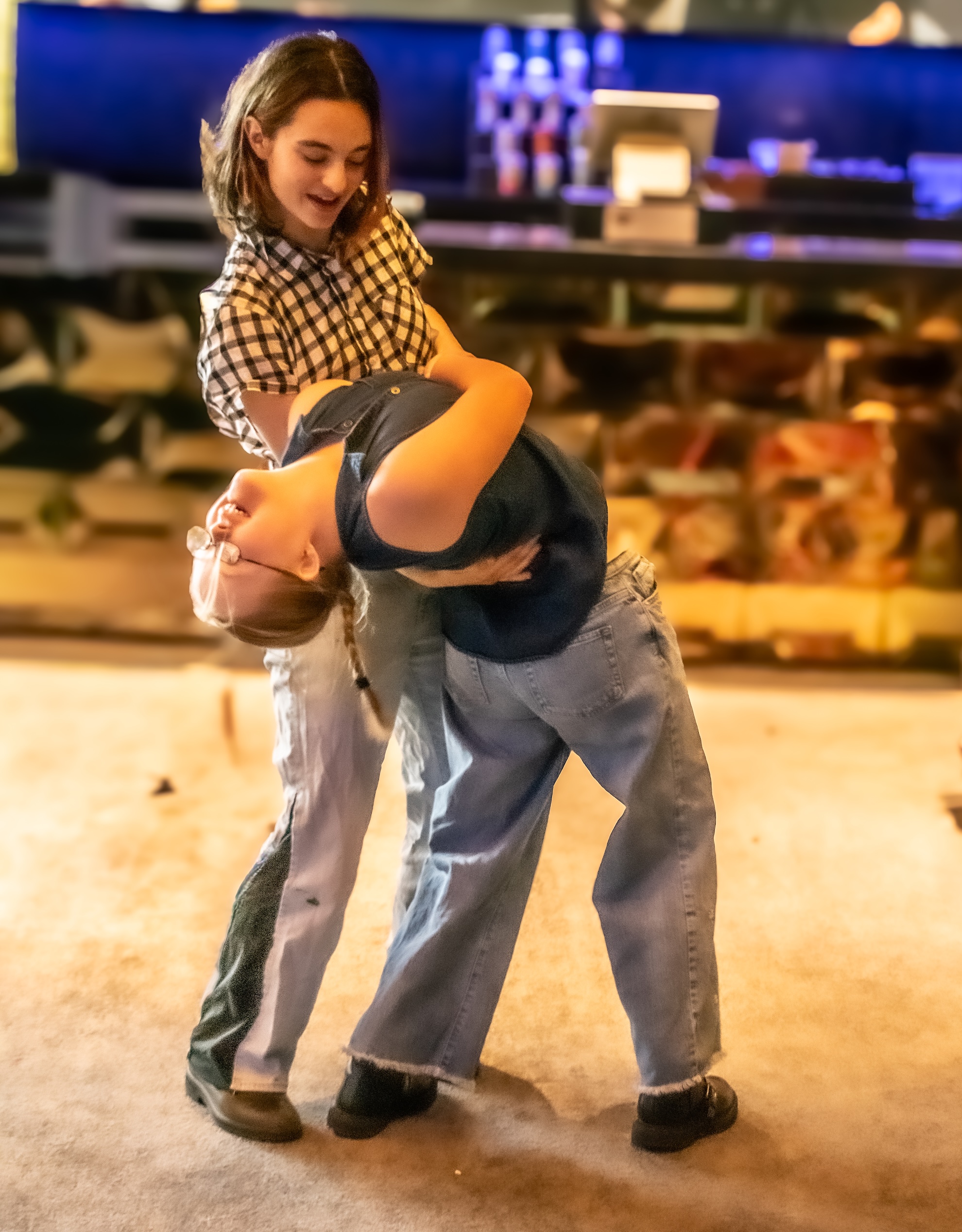
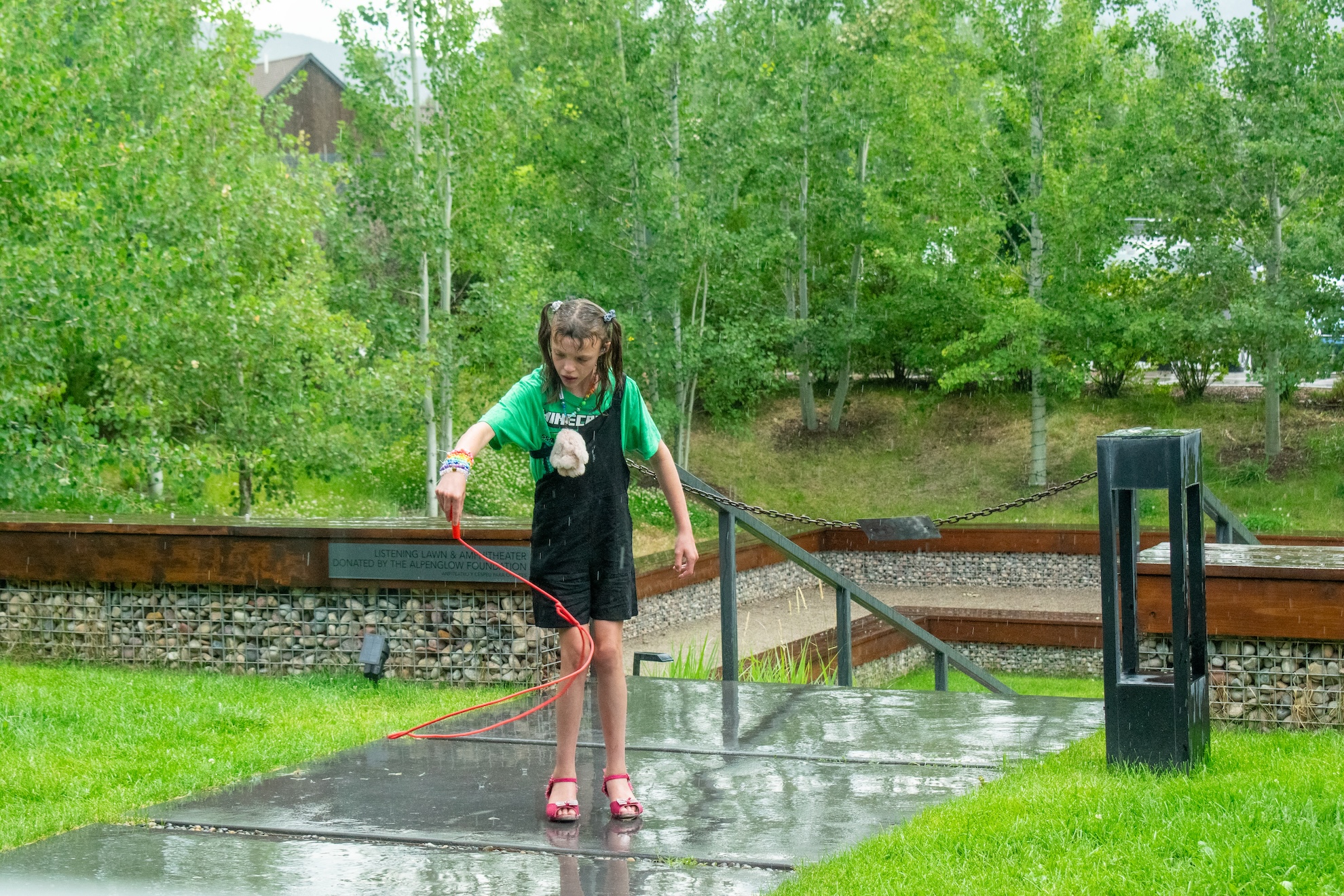
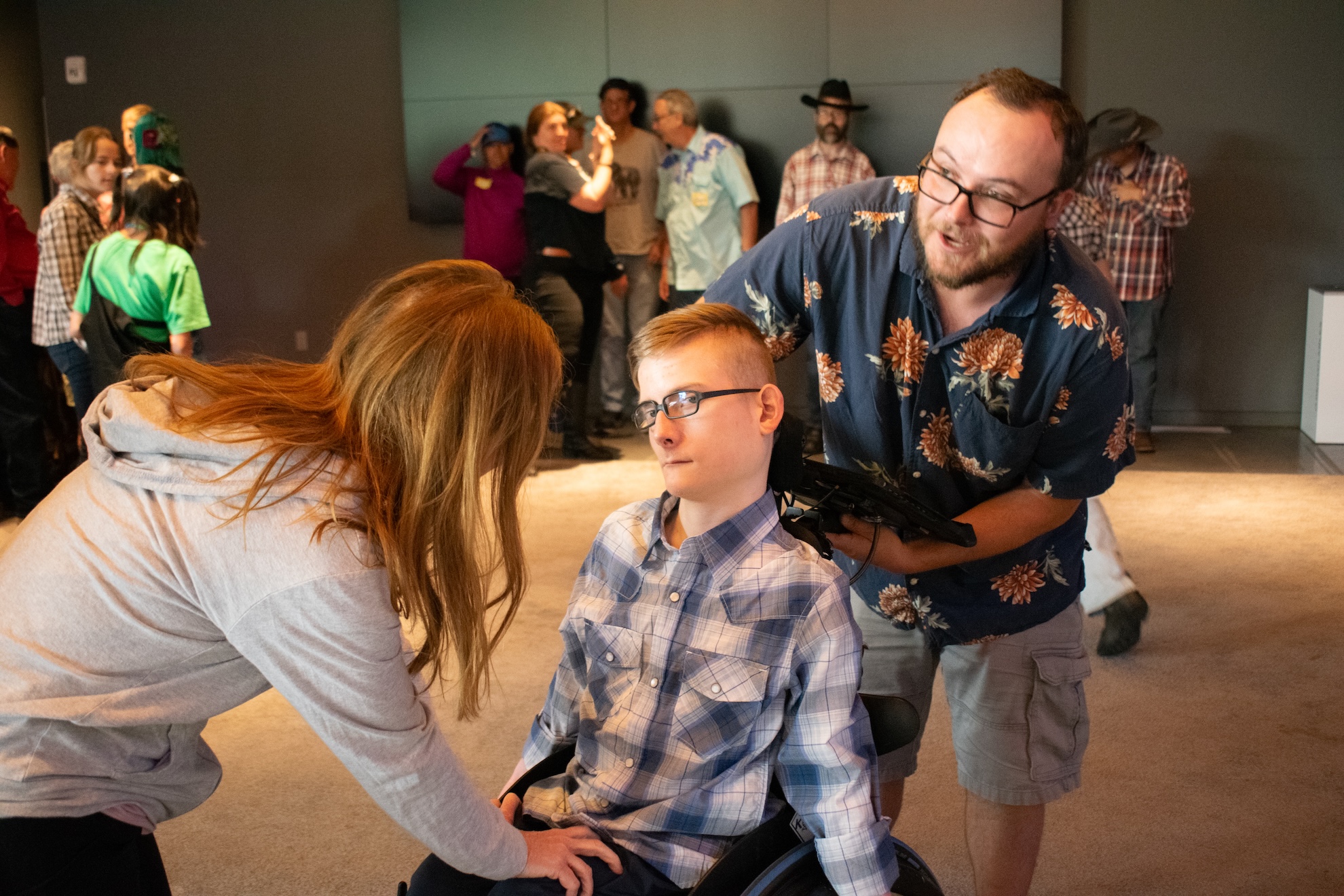
One of our days was spent in the field. and I was assigned to Challenge Aspen to document their last day of rehearsals at their Music and Dance Camp, an adaptive arts intensive for individuals with disabilities of all ages. The program encourages self-expression through theater and culminates in a live, original production. Admittedly, I was a bit relieved to know we would be contained in one place rather than my chasing people on adaptive bikes down Valhalla, a mountain bike trail on Snowmass that has huge jumps, but the theatre presented it's own technical challenges. To be shooting photography on a camera I was just getting reacquainted with in a dark theatre, was a challenge within itself, but it truly made the day about everything I had been learning in class and it felt so good to be returning to my own true passion of documentary photography (and film), which I studied at Boston University. I let my technical deficiencies not preclude my desire to observe the beautiful relationships formed between the campers and the staff.
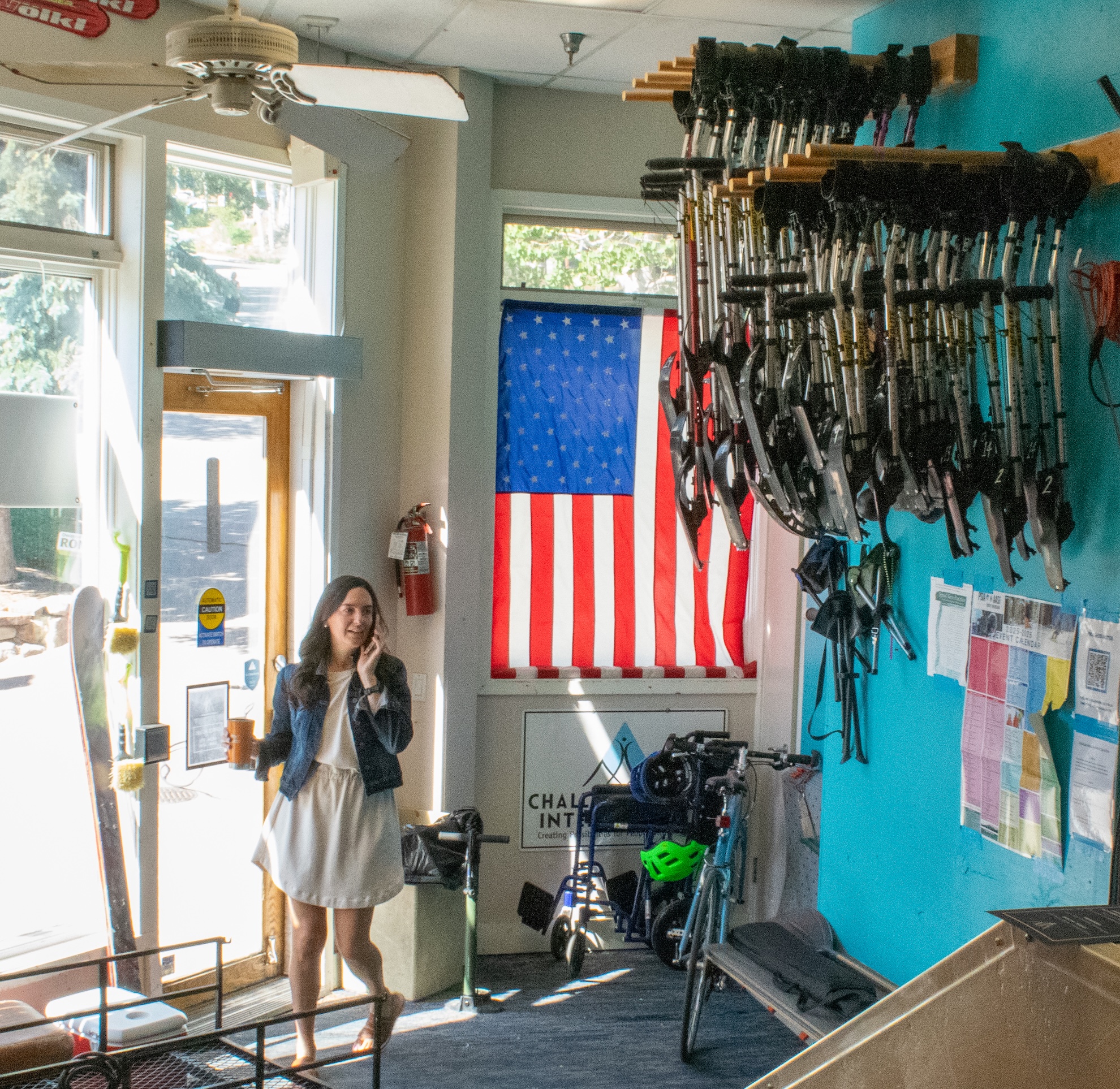
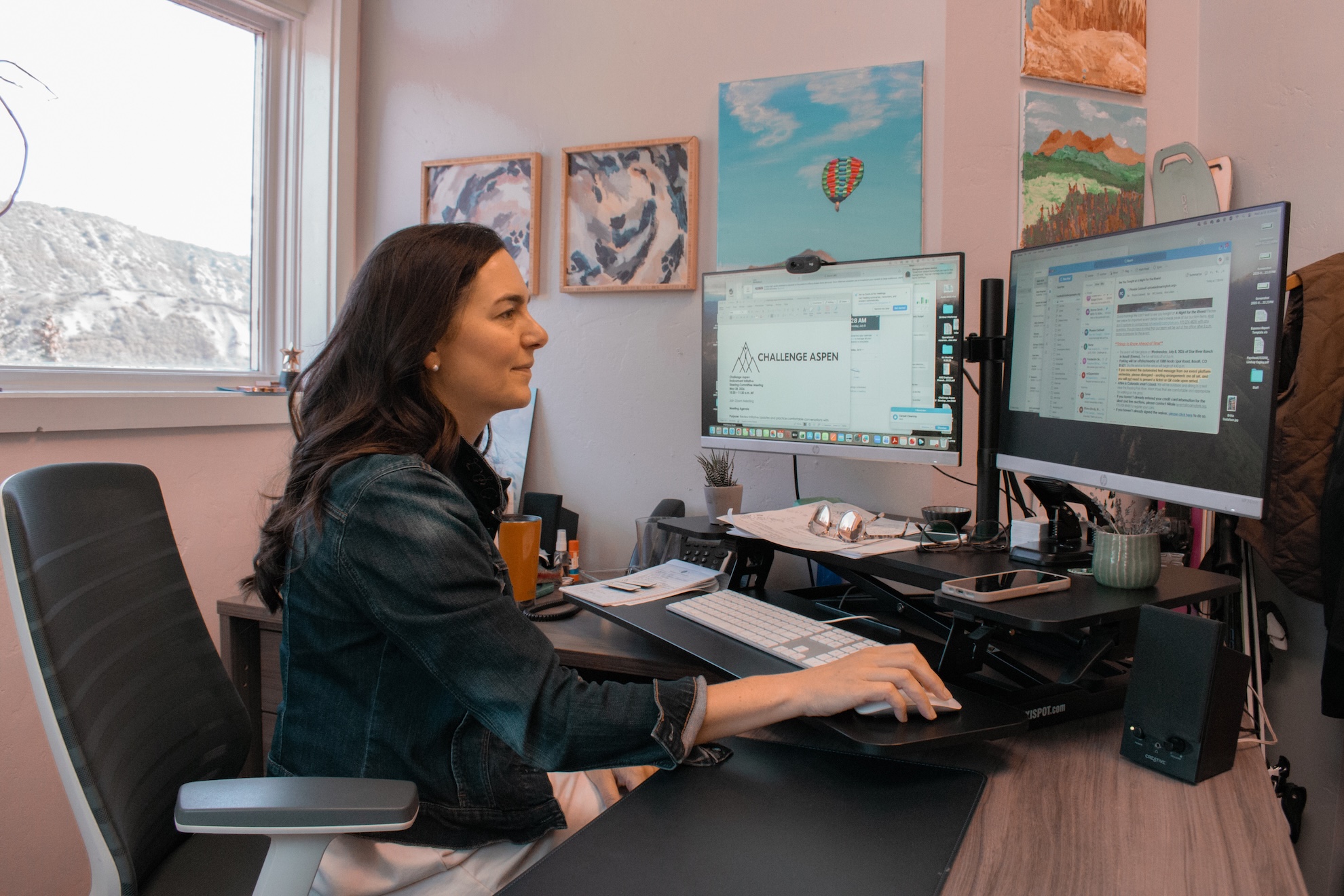
Visiting the Challenge Aspen offices before heading down to document the rehearsal, CEO, Lindsay Cagley gave me a tour of the facilities, and all the adaptive equipment they stored for summer and winter sports. Challenge Aspen provides year-round adaptive recreation in the Roaring Fork Valley, offering customized gear like sit-skis, outriggers, and off-road handcycles. Their adaptive-certified instructors provide specialized coaching for all ability levels across the four Aspen Snowmass mountains. As Lindsay explained all the equipment, showing me the 175 jackets for the volunteers (they need more) we talked about the theatre camp, “People with disabilities are isolated, these campers want to be seen, not hide.”
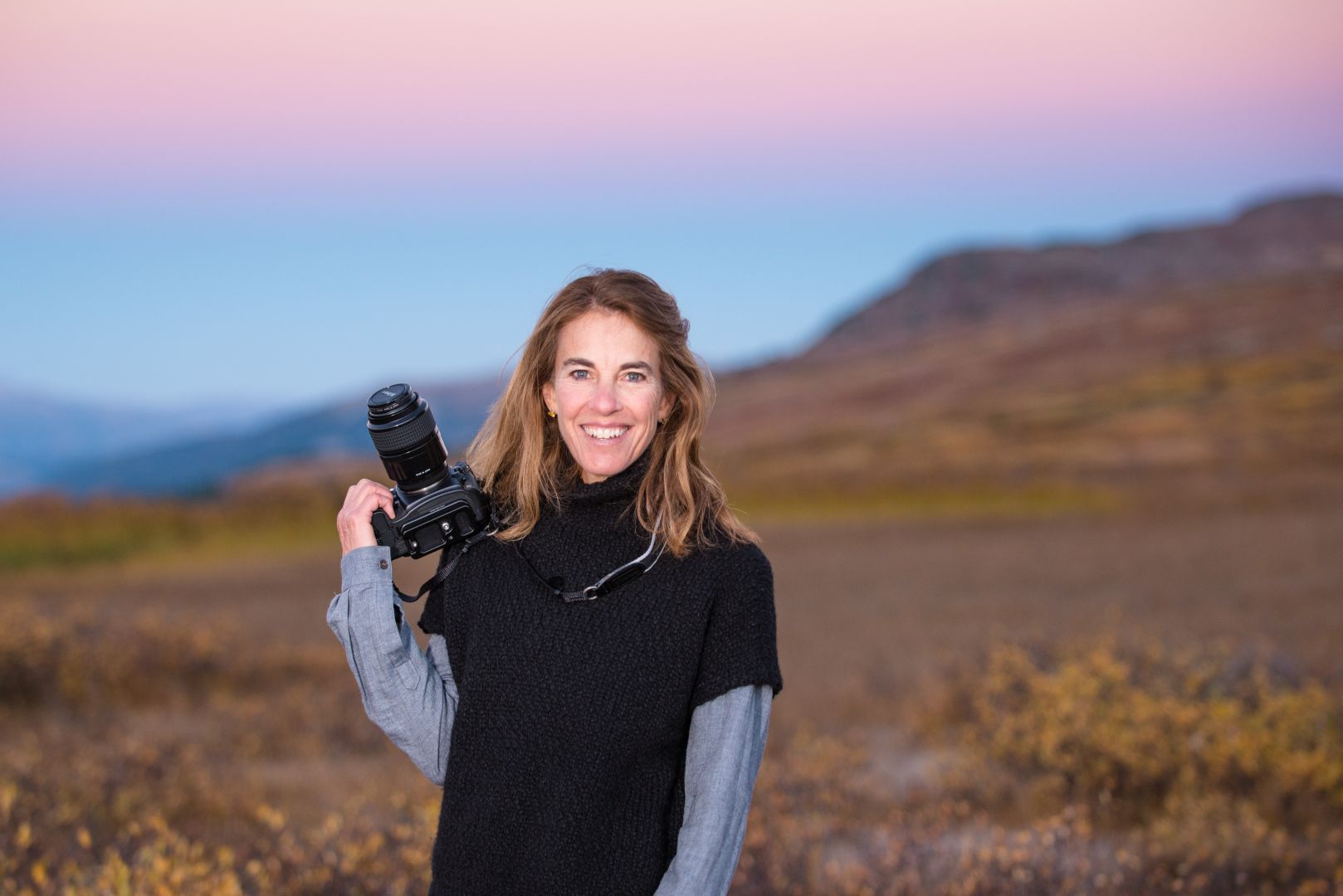
For years, I've been documenting this valley almost entirely with my iPhone. It became easy, efficient, and convenient. But convenience quietly replaced creativity. Holding my Nikon again reminded me why I fell in love with photography in the first place. I found myself getting close, waiting for expressions, watching relationships unfold, and looking for the quiet moments between the obvious ones.
I left Anderson Ranch inspired, challenged, and honestly a little frustrated with myself. Why had I waited so long? Why had I convinced myself that my phone was enough? The answer doesn't really matter anymore. What matters is that I'm back.
One of the greatest gifts of living in this valley is having access to organizations like Anderson Ranch Arts Center, where some of the world's most accomplished artists generously share their knowledge. We often take these opportunities for granted because they're in our backyard, but they're exactly what makes this community so extraordinary. The other gift is having non-profit organizations like Challenge Aspen in our valley, and I want to dive in deeper, lucky that I have platforms to share these stories. Thank you Anderson Ranch for switching back on my creativity which I will continue to use for the greater good right here in our valley.