With all of our boys almost out of college, I told them I was heading to Spain for three weeks to learn Spanish, with stops in Bilbao, Spain and Saint-Jean-de-Luz France. My youngest looked at me and said, “Mom, I think it’s time for you to do you,” and it hit me that my youngest was no longer our little one, but a wise, sweet, boy-man ready for us all to go off on our own adventures.
It was strange, setting off without them. Looking back, some of my proudest moments in my work have been as a travel writer and being invited on media trips that I went on often with just my boys, as my husband couldn’t join us due to his work. At ages 10, 13, and 15, they became my travel companions, taking care of each other while I stared out airplane windows, trying to calm my stomach as the plane pitched through turbulence over the Rockies, my hands clutching that tiny paper bag giving me absolutely no solace.
I missed my little ruffians dreadfully traveling solo from Boston to Bilbao, Spain, but also feeling the thrill of independence as I plowed through seven uninterrupted hours of movies and books: The Penguin Lesson, Billy & Molly: An Otter Love Story, Maleficent, and my chosen read, Fates and Furies.
The flight was a manageable seven and a half hours, though the food on Iberia Airlines was utterly forgettable. No matter. I was about to enter Basque Country, where the Michelin Star cuisine is the stuff of legend. I love food, but I refuse to waste a meal on anything that tastes like cardboard. Knowing what awaited me, I was happy to hold out until I could find food with meaning, character and flavor.
Stepping off the plane into the early morning light, I was flooded with an overwhelming sense of adventure. About a year ago, I’d begun to feel a pull to pivot my life yet again and return to my travel writing. After five years of focusing solely on my bottom line, I had placed myself in a box that I was desperate to break out of and return to documenting people and places. I’ve always believed in the power of thought, but even I couldn’t have imagined that belief would carry me across Africa, Germany, Spain, and Italy all in a single year.
As a child, I used to imagine the future of air travel looking like The Jetsons with everyone flying our own little planes and at the push of a button bringing forth a steaming plate of whatever I craved. Never did I imagine it would all become worse, not better, at least for those of us not flying privately or racking up elite status. All it takes is money… or miles.
Guggenheim Museum in Bilbao
Driving in a taxi over the bridge into the city, a glint of gold flashed in my peripheral vision. I turned to look gasping at the sun struck sight of The Guggenheim Museum, awash in gold brilliance. As we continued driving the museum’s shape began to take form, a flowing cascade of waves and soft lines. I was excited to explore it and see the exhibitions; Helen Frankenthaler: Painting Without Rules and Barbara Kruger: Another Day. Another Night.
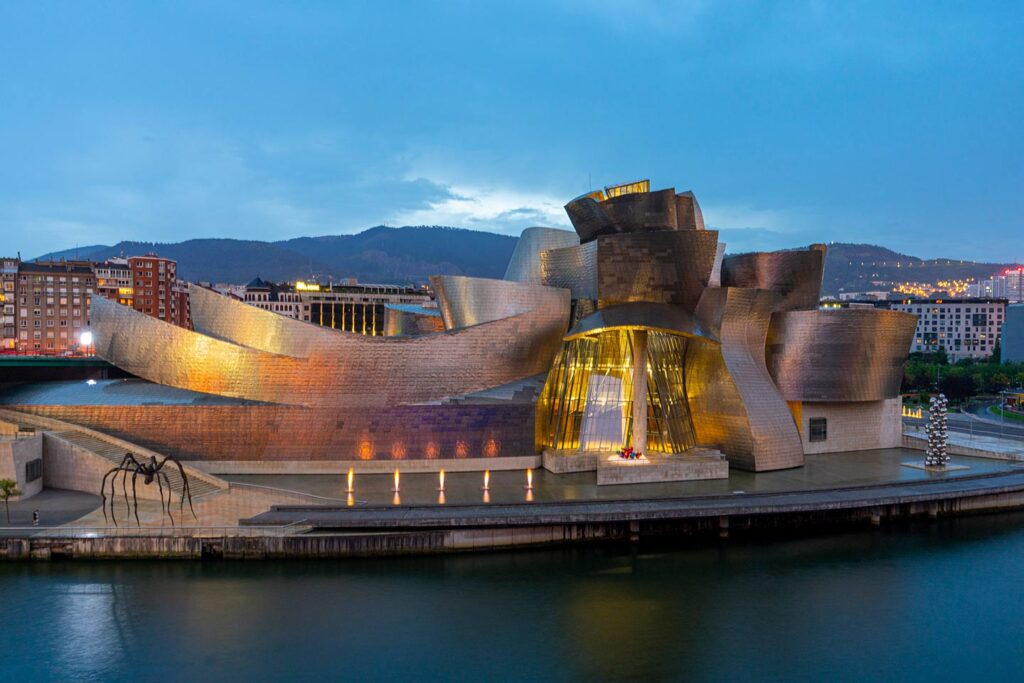
Designed by US architect Frank Gehry, the Museum building is a large sculpture made of titanium, limestone, and glass, and has become the most recognizable icon of the city of Bilbao. The exhibition galleries, some boasting surprising shapes, others with orthogonal configurations, are organized around a spectacular Atrium, crowned with a metalic flower over its skylight.
Guggenheim Bilbao
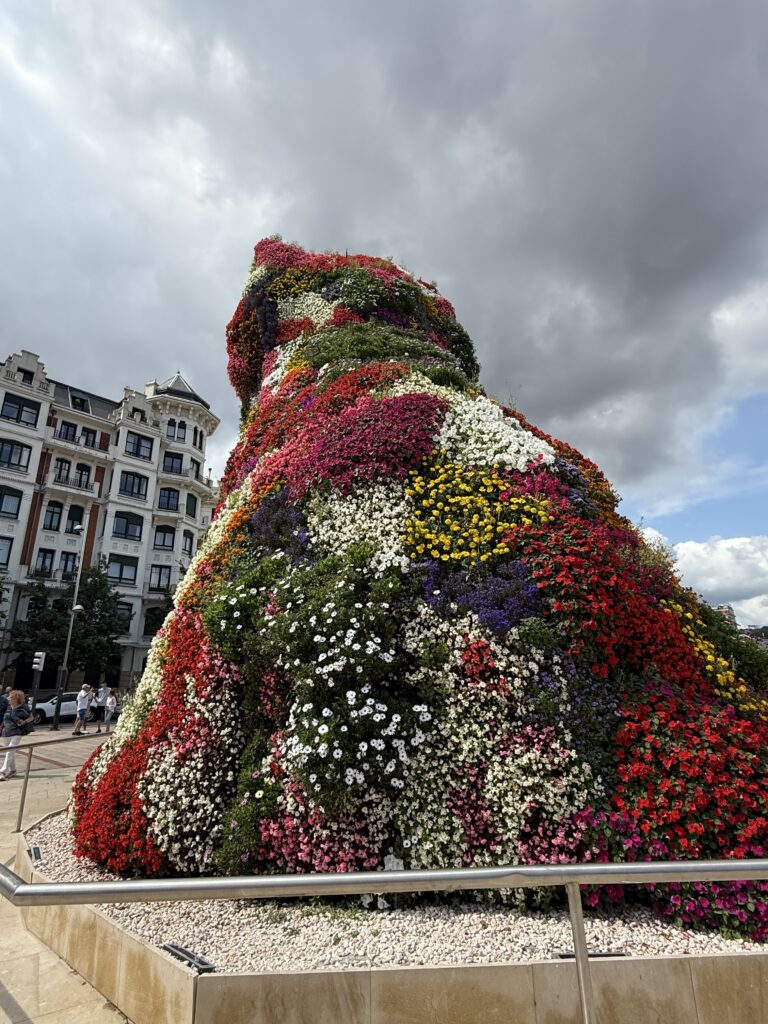
CLIMATE NEUTRALITY 2030
The Guggenheim Museum Bilbao has been at the forefront of environmental responsibility for the past twenty years. In 2004, it was certified for ISO 14001. Since then, sustainability has been a key concern in the Museum’s Strategic Plan. In 2021, the Museum set out an Environmental Sustainability Strategic Framework in line with the Sustainable Development Goals adopted in the United Nations General Assembly resolution known as the 2030 Agenda. This laid the foundation for the development of the first Sustainability Action Plan in 2022.
Guggenheim Bilbao
Maman
The spindly Maman spider that stands before The Guggenheim Museum in Bilbao was magnificent in its own right, but when you read about it, it took on deep meaning for me, a mother of three boys:
Almost 9 meters tall, Maman is one of the most ambitious of a series of sculptures by Bourgeois that take as their subject the spider, a motif that first appeared in several of the artist’s drawings in the 1940s and came to assume a central place in her work during the 1990s. Intended as a tribute to her mother, who was a weaver, Bourgeois’s spiders are highly contradictory as emblems of maternity: they suggest both protector and predator—the silk of a spider is used both to construct cocoons and to bind prey—and embody both strength and fragility. Such ambiguities are powerfully figured in the mammoth Maman, which hovers ominously on legs like Gothic arches that act at once as a cage and as a protective lair to a sac full of eggs perilously attached to her undercarriage. The spider provokes awe and fear, yet her massive height, improbably balanced on slender legs, conveys an almost poignant vulnerability.
Guggenheim Bilbao
My cab dropped me off on Correo Street in Old Town, Bilbao where the Bilder Boutique Hotel was located, an affordable hotel with 39 rooms. My childhood friend, Karen, had arrived on a different flight and was riding the bus from the airport and walking to the hotel in the hot sun with her suitcase. Karen lives for travel. For me though? A taxi was worth it, and is was a nice way to arrive at 9 a.m. before the streets got too busy with tourists. There was a heat wave in most of Europe, but not Northern Spain where the weather was a breezy 70-degrees, with palm trees waving gently above tiled rooftops.
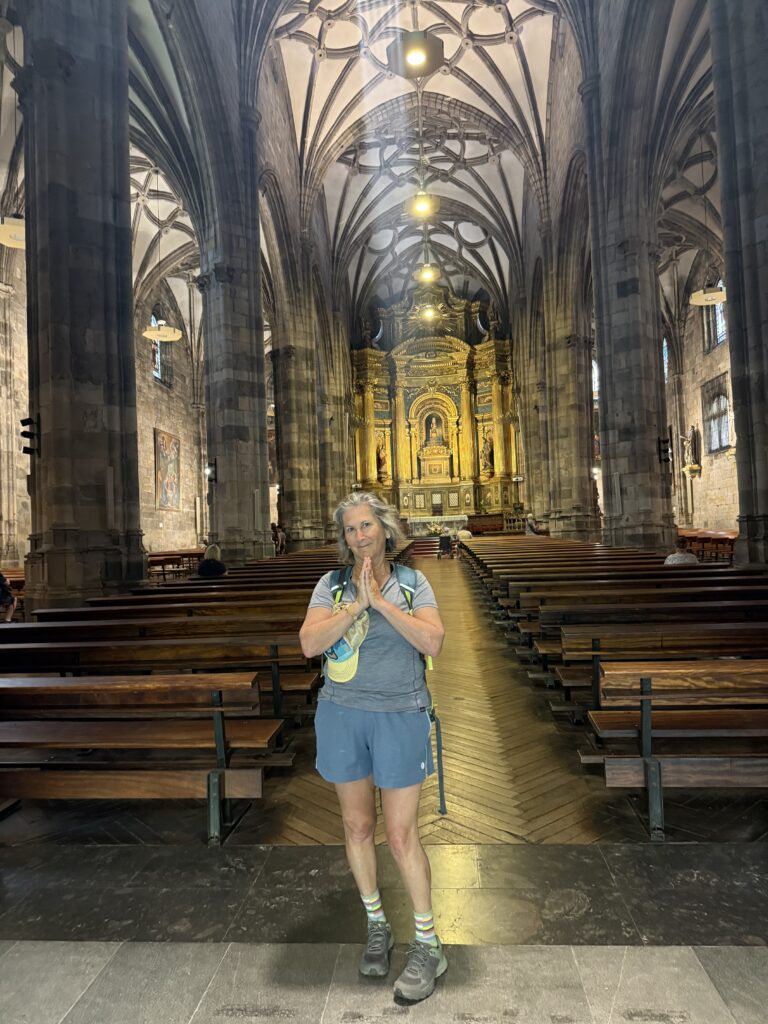
Needing to walk out the kinks from sitting on the plane so long, as soon as Karen arrived we began exploring Old Town, walking through the many streets and hiking up hundreds of steep stairs in the hot sun to get to Basilica of Begoñia, a 16th-century Gothic church perched on a hill overlooking the center of Bilbao. You can take a hillside lift or the metro lift if you’re not up for the hike. We also hiked Monte Artxanda, wandered through medieval alleys, and sipped vermouth in plazas where grandparents played cards and children chased pigeons.
700 years ago, Bilbao was a village made up of three streets surrounding the Alcázar, now replaced by the Church of San Antón but then expanded to 7 streets: Somera: “the street above”, Artekale, “the middle street”, Tendería, “the shopping streets,” Belostikale, the Fishery, Carnicería Vieja, “the meat street,”. Barrenkale, “the street below” and Barrenkale Barrena, “the street behind the street below.”
In Your Pocket
Basilica of Begoñia
Dando La Brasa: Favorite Restaurant in Bilbao
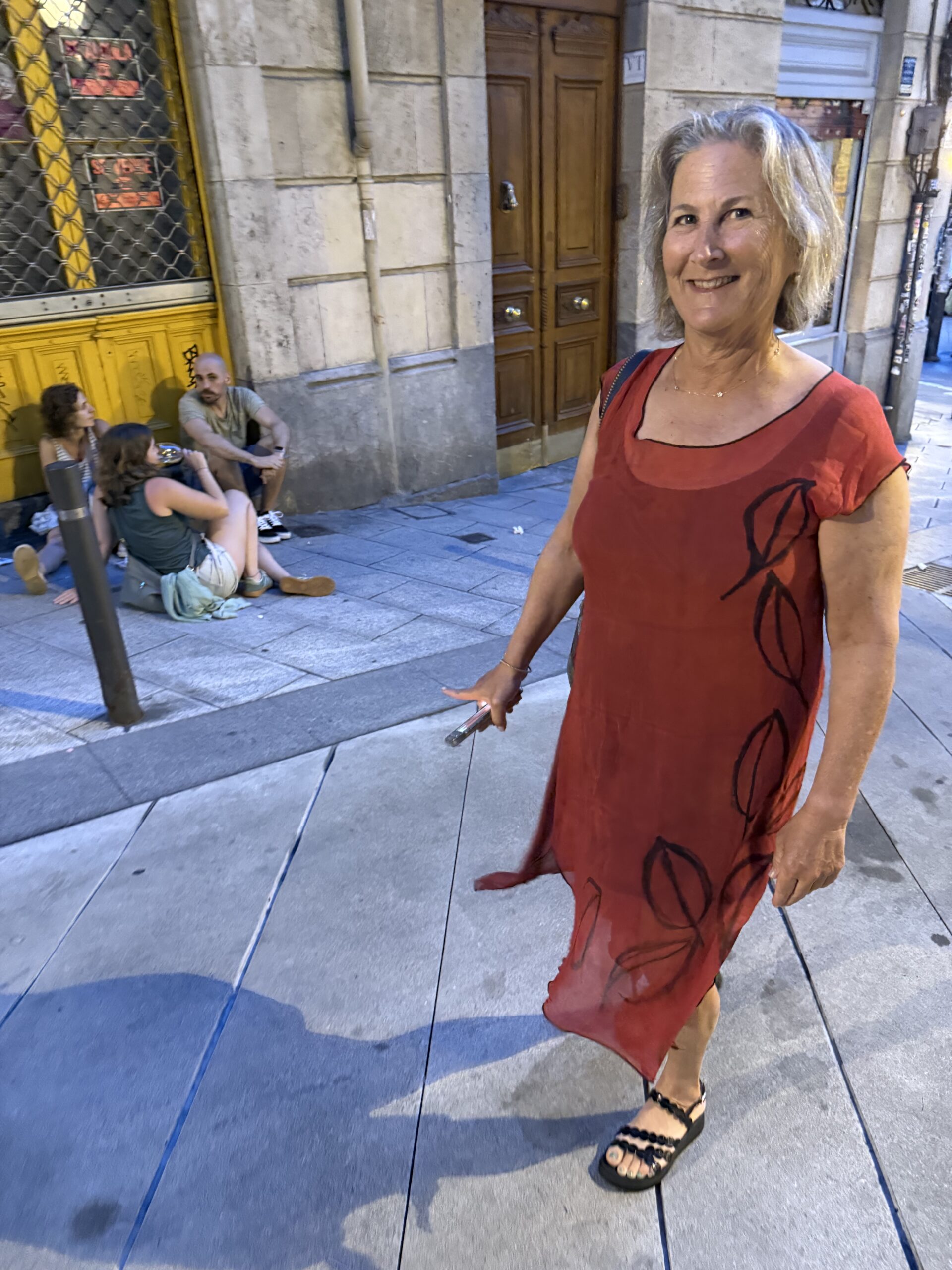
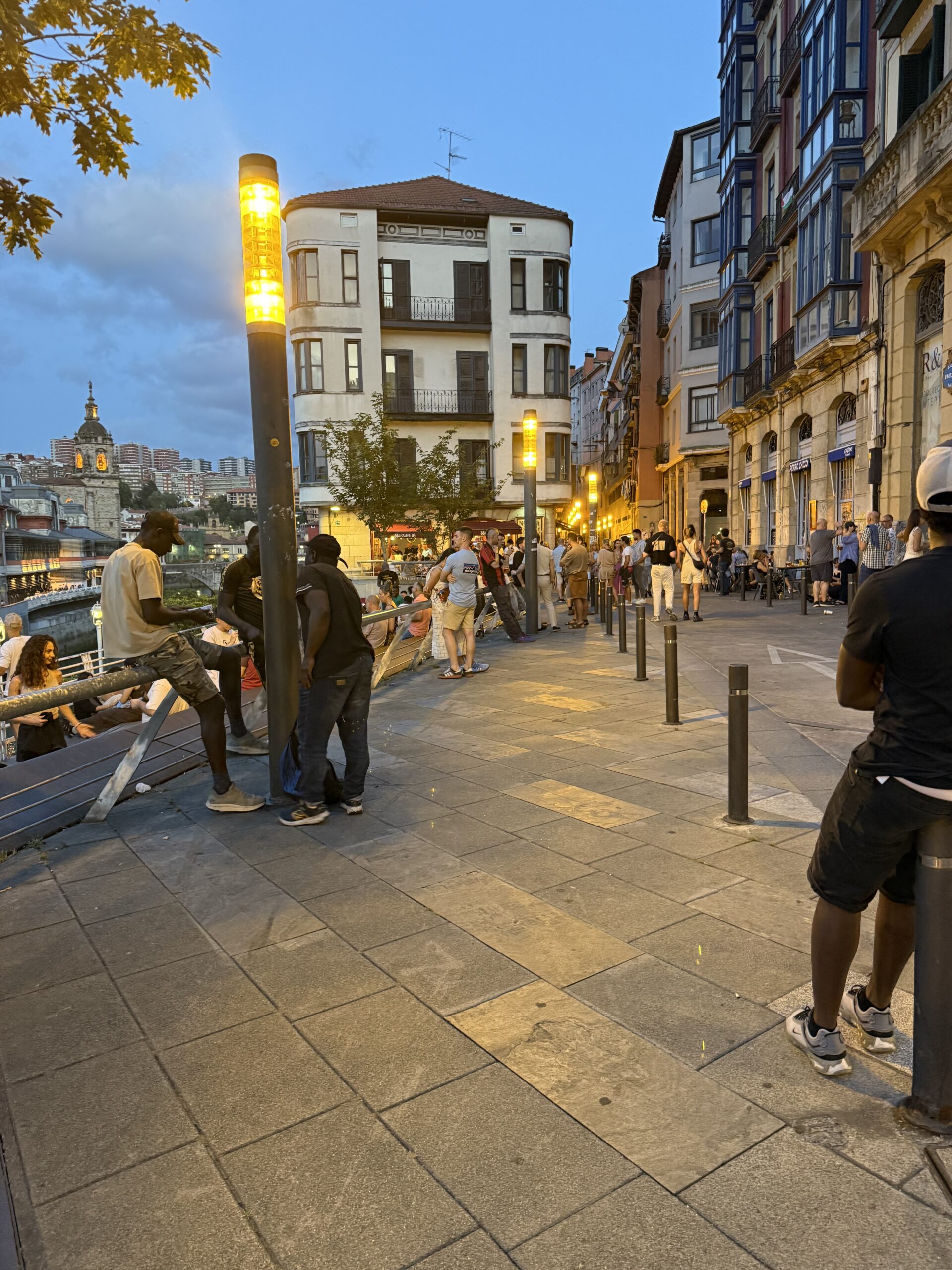
Our first dinner in Bilbao was on the hilly side of town at Dando La Brasa, a restaurant with great reviews on the opposite side of the river. On the way we witnessed the food culture firsthand with hordes of young people sitting on stone stairs looking over the river, or wedged into apartment entrances on the cobblestoned streets, happily chatting away in their social groups, little plates of food and glasses of beer at their feet and wisps of smoke from cigarettes swirling up to the sky. It seemed so uncomfortable, people crouching down on steep hills, but our youth care less about luxuries and more about socializing and all being together.
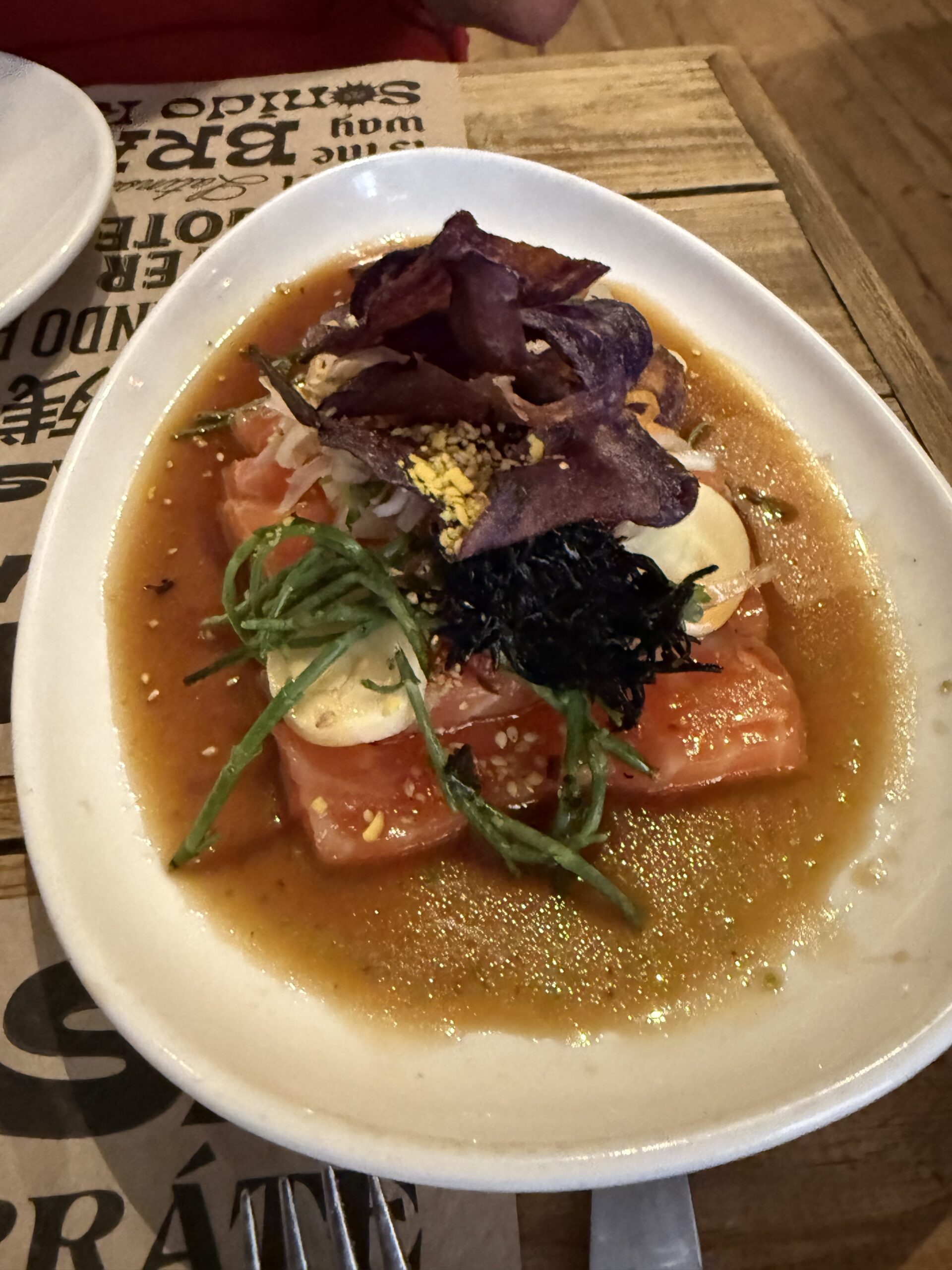
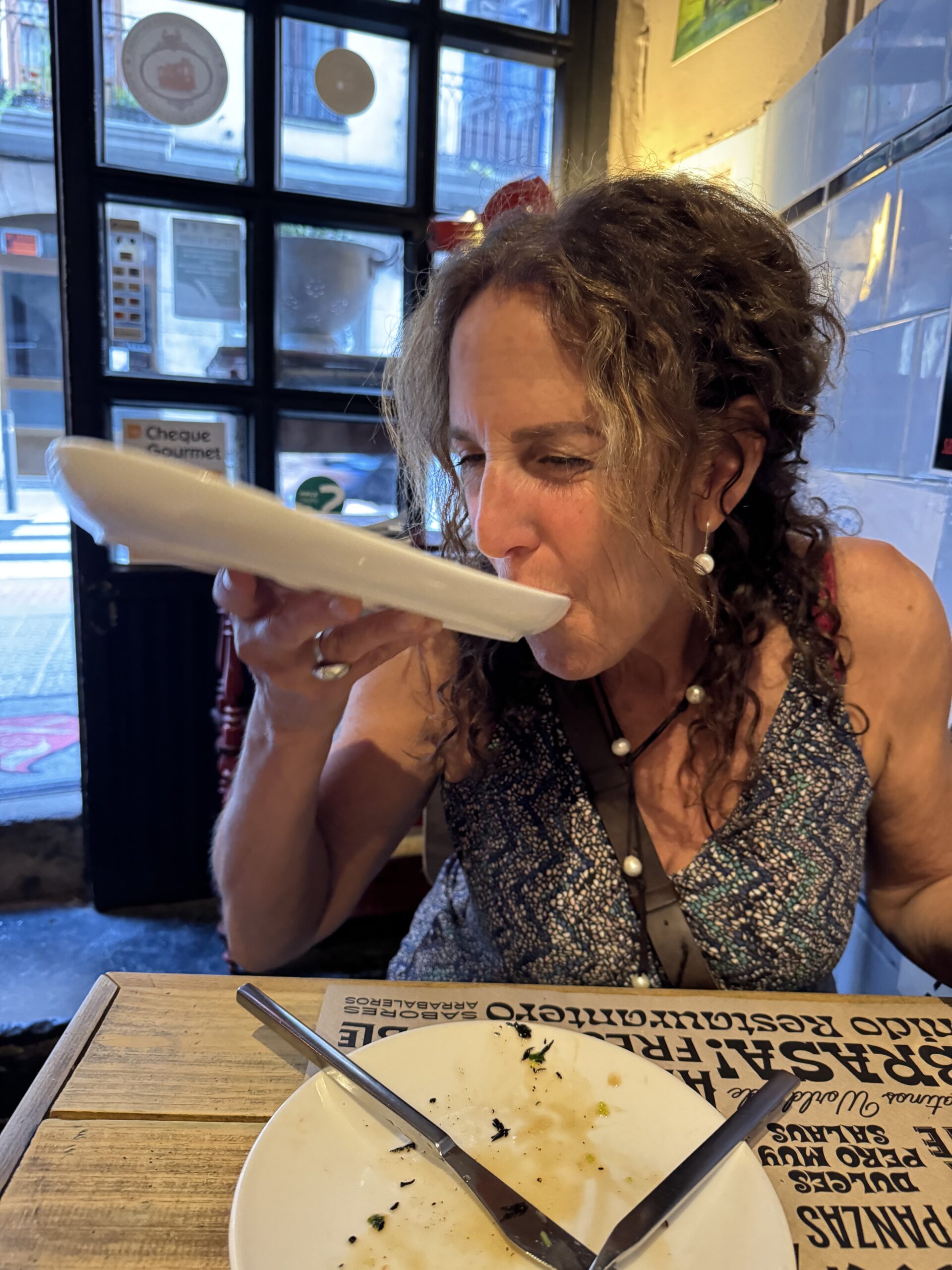
Tucked away at the top of a hilly cobblestoned street, the restaurant didn’t look like much from the outside but the food made us feel as though we had unearthed a hidden treasure. I ordered Pez Mantekilla: Butterfish marinated in miso, celeriac, and fennel puree, and hence began my love for Basque food. At the time, I had been gluten-free for over three years and with nothing to slop the delicious sauce up with I had no choice but to drink the sauce from the plate.
Basque Country Food
Basque Country has over 40 Michelin starred restaurants and is considered one of the best fine dining destinations in the world, and I can see why. Karen knew that getting the lay of the land first through the food was essential and so she booked us a Tournè Pinxtos and Friends tour led by Oskar from Tournè Bilbao (@salimosdebilbao). Oskar gave us a wealth of information as we tasted the local plates first at the more well known restaurants, over run by tourists, and then to the local places, beginning with La Olla for a “Tortilla de bacalao” – a tortilla is like a quiche without the crust, with potatoes and ham or sausage, so delicious that when jet lagged and all awack after returning home, I woke up at 2:30 a.m and made a Tortilla de Bacalao for my family.

Our exceptional ham is selected from the best in the Extremadura mountains and Salamanca, our northern tuna is exquisite, as well as our anchovies, the magnificent Cariñena wine, our selection of wines, our wide assortment of sandwiches, our ham and cheese fritters and our appetizers. The selection in origin of these products makes La Olla a reference in the Basque Country, which is famous for its “pintxo” gastronomy.
An essential requirement for a real Iberian acorn ham is the “dehesa”, a forest rich in acorns, in which pigs are raised in total freedom. Without it, a 100% acorn fed free range Iberian ham would not be possible.
The Iberian acorn hams of La Olla, with denomination of origin of Extremadura , are raised in the “dehesa” and are characterized by a series of parameters that impact our senses:
https://www.barlaolla.com
Oskar spoke with pride of the Basque people and how they took an industrialized city, ruled after the Spanish Civil War by the dictator Franco, and revived it through art with the building of the beautiful Guggenheim museum.
700 years ago Bilbao was a village made up of three streets but then expanded to 7 streets: Somera: “the street above”, Artekale, “the middle street”, Tendería, “the shopping streets,” Belostikale, the Fishery, Carnicería Vieja, “the meat street,”. Barrenkale, “the street below” and Barrenkale Barrena, “the street behind the street below.”
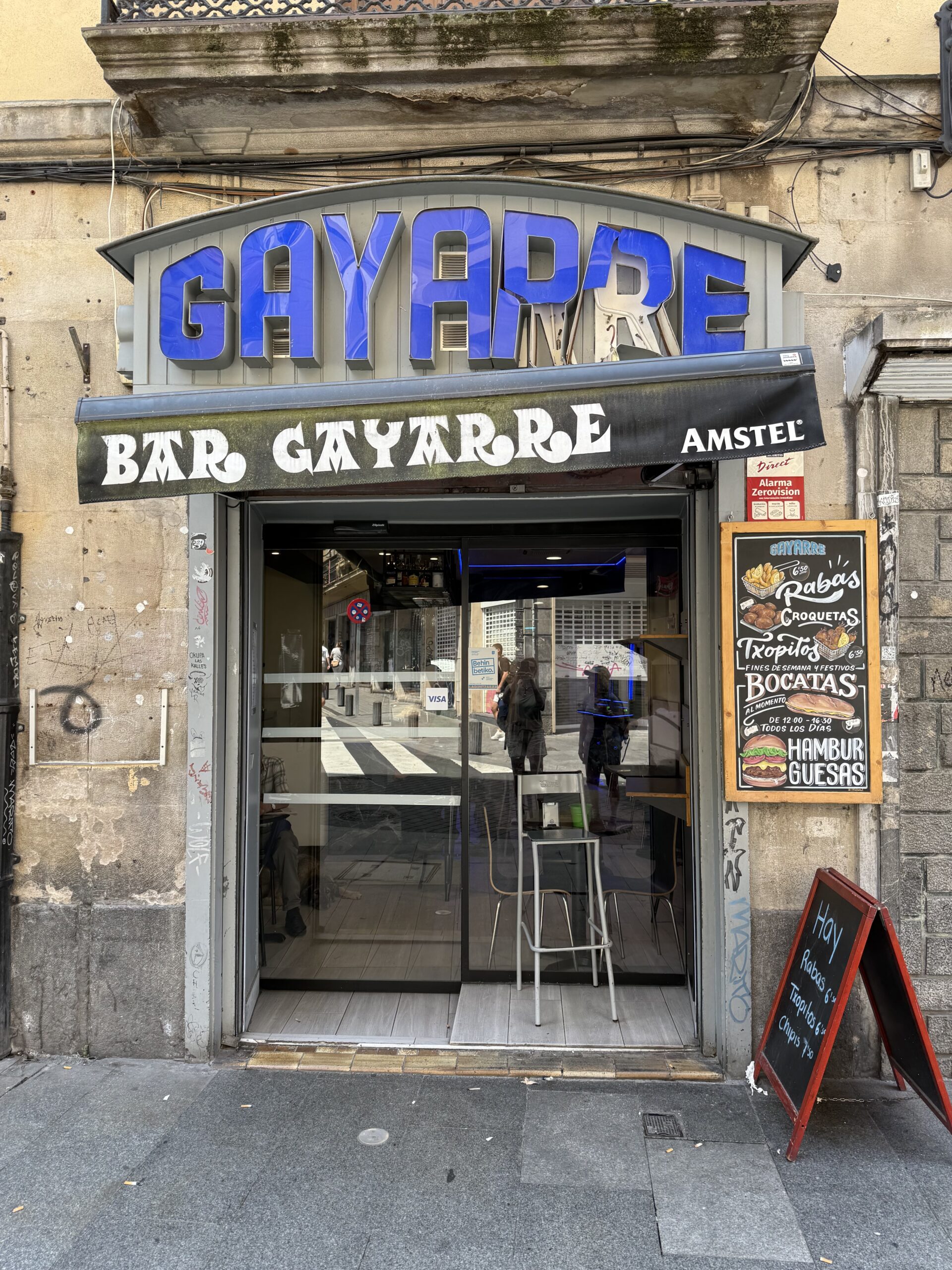
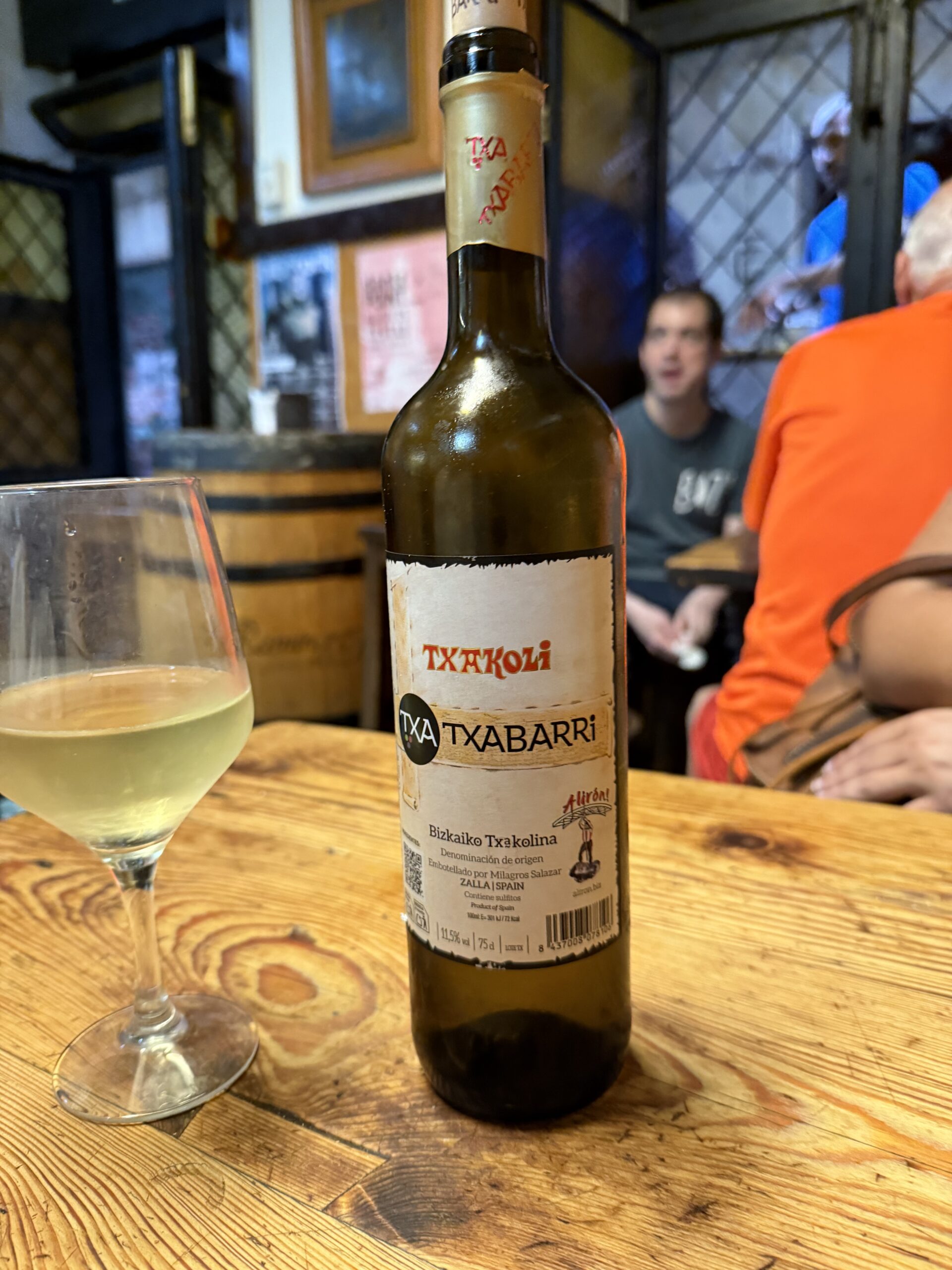
Oskar drank a popular local drink that I did not develop a love for, Kalimotxo: coke and red wine. I did however love TXakoli wine, a local light and effervescent wine that the locals seemed to drink with breakfast. It’s no wonder that the Spanish have siestas from 2-4 p.m. every day. He taught us about pinxtos, chef created innovative and diverse combinations of ingredients. Upon researching for this blog post I’m discovering that I was drinking a ton of that wine thinking it had a significantly less alcohol content then regular wine, but it seems it is 11.5%. Some of the places Oskar took us to local places that we never would have found on our own where the vibe felt like an Irish pub filled with local Basque people. We ate jammy chorizo, actually not my jam as I found it a bit mealy, and drank the local cider, which, if drinking apple cider vinegar is your bag, you’ll enjoy, but I can assure you it is NOT nearly as delicious as Big B’s hard cider.
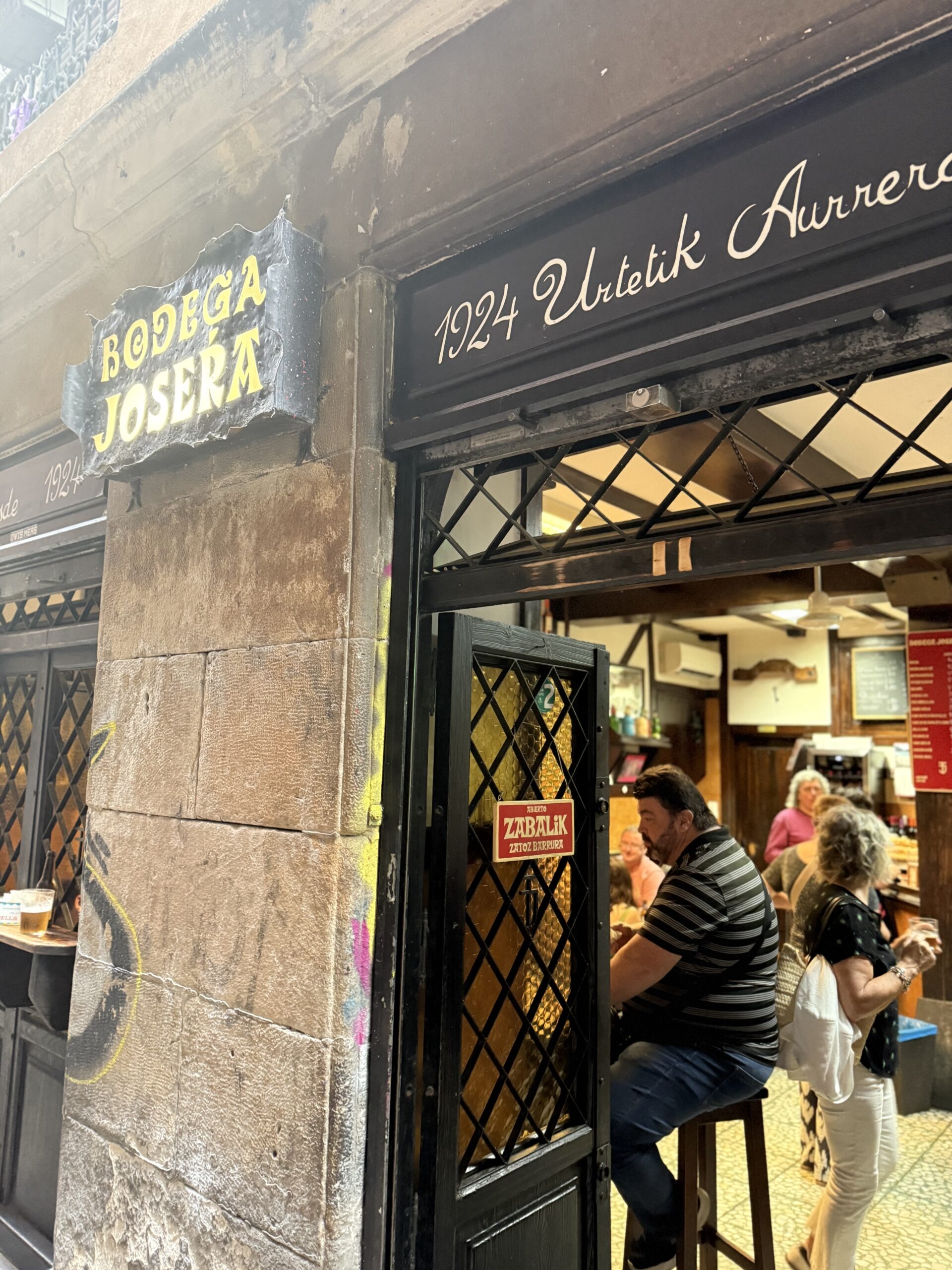
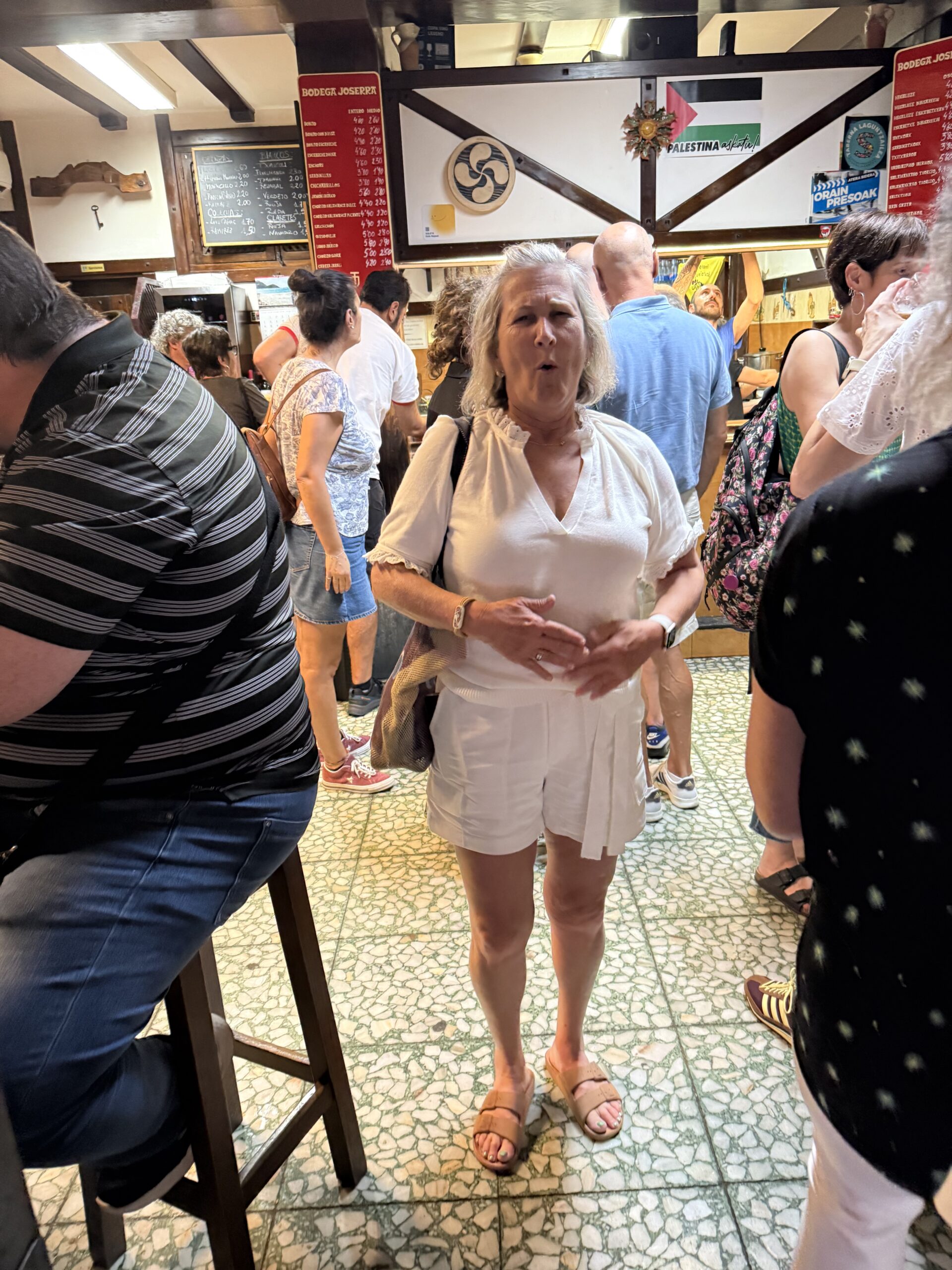
Bodega Joserra first opened its doors as a bodega, or place where wine is sold, in 1924. Magencio Trigueros served rough wines in metal garrafas, pitcher-like containers that still stack the shelves of the bar today. He started slipping surreptitious snacks to clients while they drank, but it didn’t take long for the town hall to catch wind and fine him. Fortunately for Bilbao, they also offered him the chance to apply for a tavern license with permission to serve food, and the rest is history.
Magencio died young, leaving the bar to the son he named it after when Joserra was just 16 years old. Joserra was followed by his son, Imanol, who carried on the family bar until his retirement in the early 2000s. The bar was rented for a few years, until José García, the husband of Imanol’s daughter Leire, offered to take it on.
Culinary Backstreets
If you are gluten-free know that many pinxtos are snack-sized portions of food served over a slice of European bread and held together with a toothpick. Rest assured that in the nicer restaurants you can request the toppings without the bread, and there is usually a menu you can order from if you sit at a table rather than stand or sit at a stool if one is available at the bar.
I abstained from bread for the first week and then threw all dietary caution to the wind, with no repercussions by the way, and then it was game on! The fish was so fresh and the sauces so good and buttery that I just had to stop drinking my plates and rather clean my plates with freshly made baguettes.
Pintxos
If you plan on stepping foot in this Basque capital, you’d better learn what poteo is firsthand. The endurance required to barhop with a Basque is real, especially considering this social act consists of downing glass of wine after glass of wine in what is essentially a bar crawl. Fortunately, the Basques have invented their own coping mechanism – the pintxo. Just about every bar in Bilbao has a selection of snacks laid out for hungry patrons, ready for you to grab and use to soak up the wine.
Culinary Backstreets
Biking from Bilbao to Getxo
What we don’t recommend doing is taking an e-bike to the nearby Getxo beach, which has The Great Mansions built between the end of the 19th and during the 20th centuries. If you do decide to go make sure the bike path is no longer under construction.
What we do recommend is visiting medieval cities nearby and sipping vermouth in plazas with football (soccer) nets at the center of each square for the children to play while their parents and grandparents socialize. And now on to tell you about San Sebastián where we went to study Spanish.