This chapter was written in a 2017 Aspen Words Summer Workshop taught by Chinelo Okparanta, whom I absolutely adored!
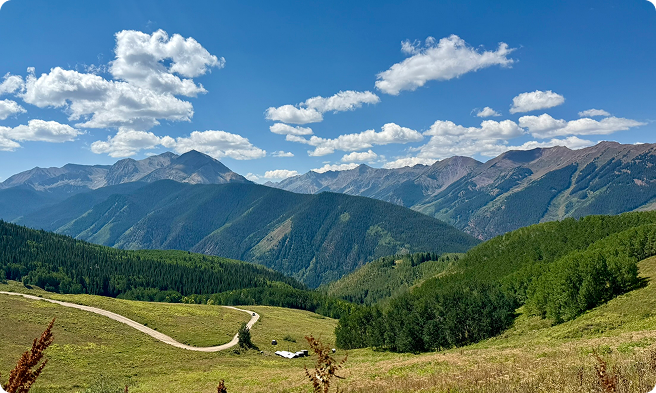
My body lay horizontally across the bed with my head hanging off the edge. The world felt so upside down at that moment; this was my feeble attempt to turn it right side up. Glancing away from the yellow water stain on the ceiling that had expanded into interconnected circles, I looked at the mountains outside my window, all connected in a wavy symphony of silhouetted peaks as the warm summer breeze rustled the leaves. I wondered whether everything in the world, except me, was connected to something.
It was the kind of evening I longed for all winter, warm enough to be outside without layers of down. I should have been out there in it, letting the sweet summer air brush lightly over my bare skin and blow off the self-doubt invading my mind. Instead I was listless, my spine sinking heavier into the mattress, weighing me down into the springs as I reflected on yet another failed romance.
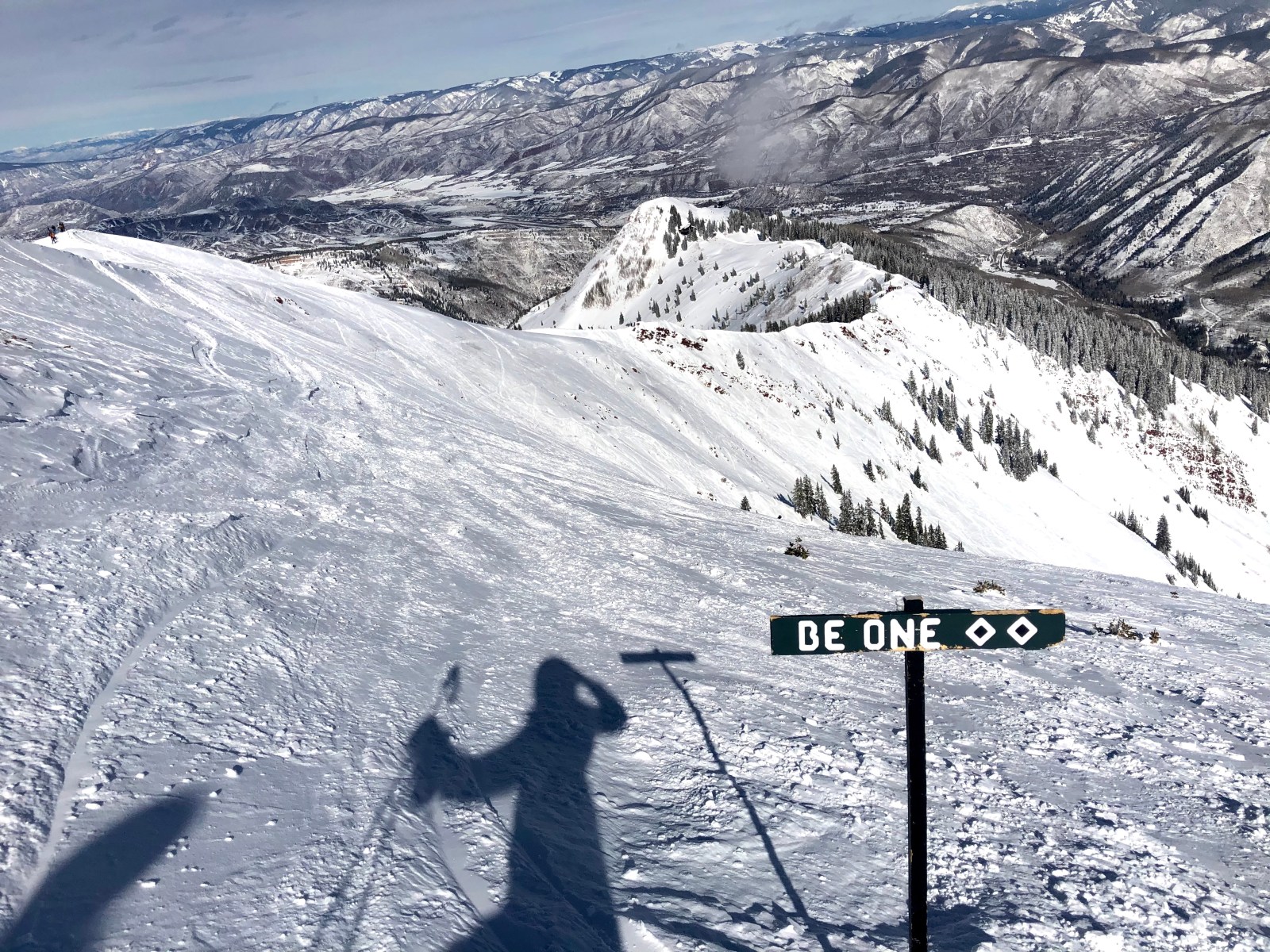
I was supposed to be on a balcony in Italy, inhaling the sweet scent of jasmine while wrapped in the strong arms of the boyfriend I had met the previous winter on top of Highland Bowl, my white gauze strapless dress blowing in the Mediterranean breeze. But somewhere along the way, the needle of my life got stuck in a groove and started skipping, leaving me hanging upside down pontificating about life, and about how this man, this relationship I had fled in Turkey the week we were supposed to go to Italy, was everything my father had ever wished for me. Only it wasn’t what I wanted.
Panic had set in as I felt the wheels of the plane touch down from my first-class seat, boxing me into the murky depths of my mind, which incessantly replayed my father’s lectures, the ones that began when I was still learning to ride a bike. “You have to take life more seriously. It’s not all about fun,” he’d admonish as I wove and swerved onto our neighbors’ lawns, packing freshly mowed grass into tiny tire tracks. “Make sure you look for a man to take care of you. Somebody with money. Somebody Jewish. I’m not going to be here watching over you forever,” he’d lecture, waving his hands in the air like a spastic windmill.
Tomás
Tomás was my father’s dream come true for his youngest daughter. I had almost moved away from Aspen to live with him in his bachelor pad in Pacific Heights, a cozy apartment that felt like a grown-up version of the living room I grew up in, with Tiffany stained-glass lamps glowing like red firefly eyes and oriental carpets sprawled beneath antique furniture his parents had imported from their travels all over the world.
He looked good on paper. An investment manager making millions. A Harvard graduate with a postgraduate degree from Columbia. Jewish, or at least his father was, which would certainly pass my father’s criteria. What wasn’t spelled out was his bipolar disorder, which leaked out the more the Turkish culture we were traveling through seeped in.
It was his idea to invite me along on a trip he was already planning, to Greece, Turkey and then Italy. “But we’re only two months into our relationship,” I said. His eagerness to speed things up concerned me. What was the rush? When he had floated the idea of my moving in with him, it felt more like an empty promise in the heat of passion as we broke in every nook and cranny of his pied-à-terre than a true invitation.
Tomás was moving way too fast, but I was done with my life in Aspen, where my endless search for a guy to take care of me kept leading from one college grad exploring his newfound freedom to another. NOT the place to get serious about life. Tomás was a real man, doing something real with his life, a man who knew what he wanted. So I let him book my first-class round-trip ticket. I was experienced enough in relationships that I should have recognized the red flags flapping loudly in the windless air.
The criticism began about two weeks into the trip. Tomás reprimanded me for everything: the way I enjoyed the prayers broadcast over the loudspeakers at night that flowed into my dreams, the way I woke up early every day ready to explore. It annoyed him that I needed to go running in the sweltering afternoon heat, despite the chained dogs baring their fangs and lunging at my heels, their chains barely keeping them from eating me whole. His judgment began to feel like a wet wool blanket. At night I wrote his words down so I could sift through them and figure out what was real and needed improving, and what was the illness talking.
One cooler afternoon, Tomás was going on about my not being properly dressed for our stroll along the wharf. When he began haggling over the price of the mussels he was buying from a barefoot Turkish man with no teeth, I strolled away. I didn’t like the seething feeling bubbling beneath my surface as I took him in: his smug expression on a head too large for his small, stocky body, a body that reminded me of a dachshund-corgi mix. There he stood in Gucci leather loafers, a pale pink Brooks Brothers shirt and a navy smoking jacket, arguing over half a cent per mussel. I didn’t care to watch his shrewd business side play out on somebody who would probably be eating the mussels he didn’t sell for dinner, and breakfast.
“Come with us for a sail,” a tanned Australian boy said with a wink as I walked by his schooner, his eyes flashing trouble and adventure as he lured me onto his boat. This was exactly the offer I was hoping for: a quick escape to the ancient city of Ephesus to send Tomás the message that I was right, it was too early for us to travel together, and his nitpicking was slicing into our romance.
Placing my white Adidas sneaker with red stripes onto the meticulously polished mahogany deck, ready to become the next character in a Paul Bowles novel, I heard the word “kidnapping” shriek into my brain. “I’ll report you for kidnapping,” Tomás was yelling as Turkish police with sweat-stained khaki armpits rolled cigarettes at the nearby market. I saw him pointing at the boat I had stepped onto, and I felt every eye follow his finger and land on me. Even the slaughtered goat heads sitting on the shelves among the pickled onions seemed to stare at me vacantly. I stepped off the boat.
On the flight home, Tomás admitted that he had put me on a pedestal the day we met at the top of that mountain peak in Aspen, but that the joie de vivre he was first attracted to had driven him to a dark place. The more carefree I became, the more he plunged into depression. He thought he wanted somebody who could bring levity and surprise to the predestined path his intellectual parents had laid out for him, but he acknowledged that his romantic illusions were a far cry from what he really needed. He needed everything in its place, where he felt in control.
Wondering whether those connecting circles on the ceiling would crumble into an avalanche of mold and suffocate me in my sleep during the next summer storm, my 32-year-old self recognized that love was not something you could force, and that I was a failure not only to myself but also to my father for not being serious enough in my search for it. One thing was clear: as much as I wasn’t cut out for the men of Aspen, I also wasn’t made for the men my father had prescribed. I was destined to live my miserably happy life all alone.
The Party in the Countryside
Needing to reacquaint myself with who I really was, and not who everybody else wanted me to be, I threw my favorite lacy dress over my shoulders and drove down to a party at a friend of a friend’s house in the countryside.
The pink velvet couch that snaked around the entire oval-shaped room was so low that I had to do my best to plop my lacy self down gracefully so I’d stop standing out like a sore thumb amid the brown shag carpet and faux terrier-fur pillows. I was dressed all wrong.
I introduced myself to the girl I landed next to, who was dressed far more appropriately in frayed jean shorts and a plaid cotton shirt tied in a knot at her navel. Her name was Lisa, a perfectly petite girl about my age with enormous, round, translucent blue eyes, an athletic body and silky blond shoulder-length hair, the type of girl most men took to immediately. Lisa had been sitting alone on the couch and was eager to talk. “Are you here alone too?” she asked. “My boyfriend hates parties, but I needed to get out of the cabin. Sometimes the quiet can be a little too noisy to deal with.”
She was chatty, that Lisa, and I sat and listened to her monologue about Chuck, her wood-chopping, flannel-wearing boyfriend. “He’s perfectly yummy,” she exclaimed, “with a scruffy beard and eyebrows that give him such character, the way they shoot off in different directions as if electrified by their own currents. The one thing is, I can’t get over his scent. He smells as if he eats bacon every morning, but he’s a vegetarian,” she said, her brows knit in perplexity. “What’s the attraction, then?” I asked, stroking the pillow next to me. Usually it was a man’s scent that drew me in. I couldn’t imagine the confusion of feeling your salivary glands juice up while being repulsed at the same time. Maybe everybody was a bit bipolar. Maybe I had been too picky all these years.
It was the gust of mountain air that made me look up to see him enter the house. His elegant stature was offset by slightly stooped shoulders, as if apologizing for his chiseled jaw and strong physique. The sign by the door said “Shoes Off,” and I watched as he placed his well-worn sneakers by the front door and set his dish on the brown linoleum countertop in the subterranean kitchen where guests mingled over guac and chips. Bending his A-framed shoulders over the hostess, he placed a large hand on her back and kissed her cheek hello. Was his hand placed gently and innocently, or did it carry some kind of ownership? I couldn’t tell from where I sat.
As Lisa rambled, I kept my eyes on the middle of her forehead so I could also watch him greet friends who seemed so eager for his attention. His haircut, shaved very close to his head with a #1 blade, felt severe. Were his long, birdlike legs peeking out of his long white corduroy shorts shaved? I knew his type: another bike-racing dude on a strict regimen of oatmeal, bike magazines and spinach.
As he moved around the party, something black flashed in my periphery, and I zoomed in for a closer look. Black socks?! I quickly turned my attention back to Lisa’s watery baby blues and dove back in.
Suddenly he was standing above us, his long, tapered legs reminding me of the blue heron I had seen by the river earlier that morning. I wondered whether his feet were webbed. “Do you think everybody was on acid in the ’70s when they built homes like these?” he asked, directing his question at me. His smile was George Clooney-like, with deep grooves around his eyes that spoke of laughter and happiness. My eyes swept the room, taking in the sunken living room, the nouveau Buddha statues and the very bad painting of the hostess hung over the fireplace, frolicking in a bubble bath. “It feels like we’re in a badly staged genie bottle,” I replied, giving him only a half-committed smile.
“If I had all that drug money, I would have NO house and take off on my Honda to see the world,” he said. Black socks… shaved head… no ambition. I tuned back into Lisa.
Ignoring our new visitor, she continued, “Sometimes he searches his beard with his tongue for pieces of his breakfast and licks the morsels back into his mouth.” I looked up to see his reaction. He was smiling, seemingly amused.
Returning to our own conversation, he went on, “Personally, I’d rather be like Don Juan, sitting on a rock eating peyote while discovering the hidden messages of life that I’d certainly miss if I sat dropping acid in a room like this.” My ears perked up, and I looked back up at his tall tree trunk of a frame. Searching for life’s meaning was far different from living a lie instilled by controlling parents. I stood up abruptly, ending Lisa’s monologue, my eyes level with his broad chest, covered only by a thin pale yellow dress shirt, undoubtedly a gift. “What dish did you bring?” I asked, staring into his deep green eyes speckled with brown, like pine trees in the forest. I waited for his answer as if it were a clue to our future.
“Mashed potatoes gratin with corn,” he replied. An impressive answer. “Made from a box,” he continued. Perfectly imperfect, I thought, noticing a faint hooked scar on his forehead that looked as though an owl had swooped down on a pitch-black night and tried to carry him away as a child. I felt something stir within me, a desire to get closer.
He introduced himself as Wes and told me he had just been recruited from San Francisco by a top architecture firm, and that it had been a tough decision because he came from a very large family and contributed his earnings to his parents, who both worked full time for a pro bono law firm helping victims of domestic violence. My earlier thoughts of becoming a spinster fell from my shoulders into the shag carpet I was kneading between my toes.
Before even asking my name, he asked if I’d mind stepping outside for a stroll under the velvety starry sky. “But you just got here,” I replied. “That’s OK. I’m not much into crowds, and the night is young.” I told him I wasn’t dressed for it. “That’s OK,” he said with his movie-star smile. “You can wear my fleece.”
Maybe the journey I had just taken, and all the journeys before it, had led me to this very moment, a moment where preconceived notions of how life should be were only that: notions. Maybe it was possible to shed what should be and accept what is. And maybe, just maybe, it was time for me to start taking life a little more seriously and just be me.