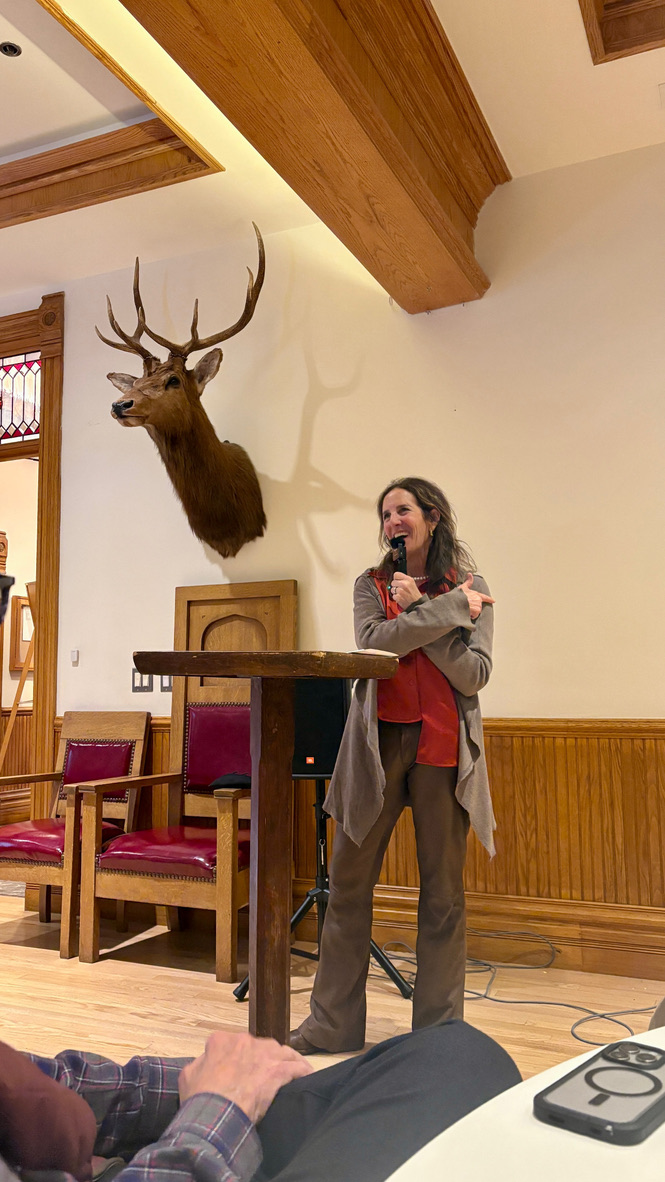

My Aunt Tutti tells her concentration camp story, a fate that easily could have been mine had I been born in Europe just twenty years earlier.
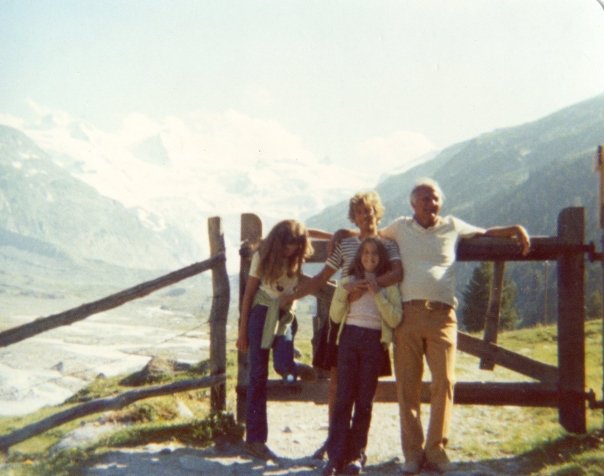
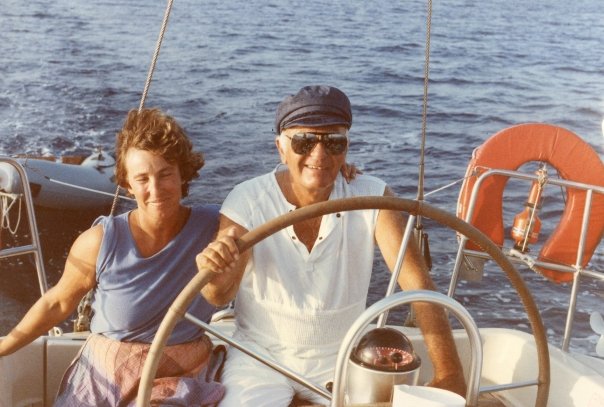
I flew to Connecticut to join my Aunt Tutti in helping unpack my British mother’s boxes at Marvin’s house. Marvin was her love after my father passed away, and she had just moved in, to save money and because she loved the big tree in the backyard. A very tall, slim, white-haired man with a big grin who walked around with his hand resting on his stomach, Marvin resembled my father, Harold, in many ways, and he adored my mother. But everybody adores my mother. Marvin was of a fading era, one that should always be vibrantly remembered. Proudly Jewish and family-oriented, he loved working at the company he built, and he filled a dark, empty space in my mother’s life.
Taking a break, we sat down for tea and biscuits, and Aunt Tutti, in her thick German accent, began to tell us about her time as an eight-year-old in Westerbork, a concentration camp in Holland. Aunt Tutti’s mother and my mother’s mother were sisters in Germany. My mother escaped the Holocaust because her parents fled to England at the right time. Aunt Tutti’s didn’t. We listened intently as she spoke.
A Concentration Camp Survivor’s Story
The following is from a speech Aunt Tutti gave at Roger Williams University in Bristol, Rhode Island.
For the first few years after 1945 and the end of World War II, nobody in my life shared or talked much about their personal experiences during the war. Even though today the slogan is “never forget,” in the 1940s survivors wanted to forget, to come to terms with the horrors, mourn their losses and try to get back into the mainstream of life.
The war years from 1940 to 1945 correspond to my ages 5 to 10, so my memories are like a movie you saw many, many years ago: you remember only certain scenes.
Every Jew received an ID card with a big J, and the name Israel was added for every male and Sarah for every female.
Then all Jews had to leave their homes and move within a few blocks in East Amsterdam, which became a Jewish ghetto of small apartments. No barbed wire and no guards, just a concentrated Jewish population. As soon as a Jewish family left their home, a German truck came and confiscated anything of value that couldn’t be taken along. Paintings, furniture and other belongings were immediately removed and shipped to the Reich.
Then the so-called razzias, or roundups, started. German trucks with loud sirens stopped randomly in front of buildings and unceremoniously rounded up the Jews living there. They were shoved into open trucks that drove off.
My father always hoped to escape these razzias. He was a metal trader, and even though the Germans took over the company, with German and non-Jewish Dutch managers overseeing daily operations, my father kept his job. Metals were a much-sought-after commodity in wartime, and the Germans needed the company to keep operating.
In 1943, however, our life changed, as it became clear that no Jew would be left in Amsterdam. My mother, father, brother and I went into hiding in the attic of Gentile friends, where we slept during the day to minimize noise and spent the nights awake. We lived for a short while like Anne Frank, but my parents didn’t have the stamina to live that way, and if we were discovered hiding, we would certainly be sent east to one of the many death camps. So we left our Gentile friends and moved back into the ghetto.
Westerbork
One day our turn came. We were picked up and taken to the largest theater in Amsterdam, which was used as an assembly point, and soon we were transported to the Dutch concentration camp called Westerbork.
My father was given permission to travel back and forth to Amsterdam to make himself useful in the metal industry. He organized a group of Jewish prisoners to sort metals in the plants, which postponed, and even saved, many inmates from being sent on to Auschwitz. Twice a week, trains left Westerbork for the east.
Food was based on potatoes and vegetables. The camp was encircled with barbed wire and tall towers where soldiers with guns guarded the prisoners. There were occasional executions when inmates tried to escape. I still remember and can see in front of me several playmates and friends I made in Westerbork who simply disappeared as they were sent to the death camps. I don’t believe I questioned anything, and I don’t believe I realized there was an Auschwitz.
As a family, we were fortunate. In 1939 or 1940, a business friend of my father’s smuggled forged Paraguayan passports to us in Holland. That passport turned out to be our lifesaver, because we were held not only as Jews but also as political prisoners. In those days, Germany and most of South America were on very friendly terms.
The Doll
About ten months after we arrived in Westerbork, our number came up, and we were told to report to the train platform to be relocated to Theresienstadt in Czechoslovakia. Before we boarded, my father had a serious talk with me. I was barely nine. He took the doll I had received for my birthday, which had a solid body but a hollow ceramic head. He took the head off, stuffed it with several $100 bills and told me to always keep the doll with me and to make a big fuss if anyone tried to take it. He said those $100 bills might buy us food and save our lives.
My father was very astute. When we arrived in Theresienstadt, we were stripped and searched, but nobody ever looked at the doll. What a responsibility for a nine-year-old. We traveled to Theresienstadt in cattle cars, a journey of several days. A beer barrel in the middle of the boxcar served as a toilet, and there was straw on the floor. We occupied a corner and stayed close together.
When we arrived, my father again asked me to do a grown-up job. As we stood in line waiting to be processed, he spotted someone he knew and made a crude ball out of paper or cloth tied with string. I was to play with the ball and throw it in a certain direction, toward a certain person. At the time, I didn’t know a forbidden message was tucked inside.
Theresienstadt
Theresienstadt was a camp for the “privileged,” a so-called model camp that the Red Cross visited while the wool was pulled over its eyes, so it could report to the world that all was well. Of course it was all a sham. Weeks were spent preparing. A café was created, stores were set up with merchandise and everything got a fresh coat of paint. When the committee came through with the German commandant and staff, a group of children were told they would get chocolate pudding for dessert that day, a lie the children were well attuned to.
Theresienstadt was an old fortress with large army barracks, usually forming a square around a large quad where roll calls were held. The elderly were housed in certain barracks, usually named after German towns, able-bodied men in others, and women and children in others still. Conditions were appalling: overcrowding, infestations of vermin and lice and, worst of all, bedbugs in the straw mattresses we slept on. Everybody had to work, even kids.
The rooms had eight rows of triple-decker bunk beds on each side, which meant 48 people living in close quarters and sharing one small wood stove. It was freezing. People came from different backgrounds, with different values and religious beliefs from Orthodox to atheist, which led to many arguments and fights.
There was one big washroom, always very crowded and in appalling condition. My mother, always an optimist, believed that to survive we had to try to stay healthy. Since she had to get up at 3 a.m. to light the furnaces, she would wake my brother and me and make sure we washed ourselves top to bottom with ice-cold water while the washroom was fairly empty.
During my year in Theresienstadt, gas chambers were being built right outside the camp, though nobody was actually aware of it; there may have been rumors. We were aware of the many transports to Auschwitz. Quotas had to be filled, and many artists, musicians, writers, actors and painters, as well as Jewish philosophers and intellectuals, were sent to their deaths, including one set of my grandparents and many other relatives.
My father received the dreaded command to assemble for a train to Auschwitz, and I remember clearly that he came to the women’s barracks to say goodbye. That was the one and only time I saw him shed bitter tears. He was excused at the last minute because of the forged Paraguayan passport, which saved his life.
I still have that passport, as well as the doll and a diary my surviving grandfather kept throughout the war years, which I have translated for my children and grandchildren.
Liberation and Return
On May 8, 1945, my brother’s seventh birthday, we were liberated by the Russian army, which was greatly feared for its reputation for brutality, with stories of rape and cruelty making the rounds. But we never had any bad experiences. They fed us heavy dark bread and lots of barley, which our systems weren’t used to. Many inmates got very sick, and quite a few died after having survived the camp.
Our return trip to Amsterdam took many weeks. At times we traveled by train, this time not in boxcars, though the trip was often interrupted by bombed railroad tracks. We also traveled in open trucks, with stops that sometimes lasted days. Eventually we arrived back in Holland.
Our first night in Amsterdam, my father contacted a Gentile friend to whom he had given many of our worldly possessions and savings for safekeeping. Little did we know that he had collaborated with the Germans and had gambled that we would not survive. He was totally surprised to hear from us. When my father explained that we literally had no roof over our heads and asked whether he could take us in, he said no; he was busy and could do nothing for us. So we spent our first night back in Amsterdam sleeping on baggage carts at the railroad station.
We rebuilt our lives slowly. First we lived in a rented room, but within two years we were back on track. I had lost three years of school, and my parents had lost all their possessions, as well as many family members.
Much later, in the 1980s, when I spent many hours with my widowed father and asked him questions about the war years, he was not well and unwilling to discuss them, saying only, “Lass mich in Ruhe,” leave me in peace. I respected his wish and didn’t pursue it, though I had a great many unanswered questions.
I want to end by saying that, according to the statistics, of the 15,000 or more children who passed through Theresienstadt, only about 100 survived, and my brother and I were two of them. Pretty mind-boggling!